24/7 Virtualization Support in Malaysia | Solutions for Business Continuity
As Malaysian enterprises continue expanding hybrid infrastructure, virtualization platforms have become increasingly critical to daily business operations, application delivery, and infrastructure scalability. This growing operational dependency also means that infrastructure downtime, platform instability, or delayed incident response can directly affect business continuity, customer experience, and operational performance.
For organizations operating virtualized environments, 24/7 virtualization support is no longer viewed simply as a technical support function. It has become an important part of operational resilience, infrastructure governance, and long-term service continuity planning.
Modern virtualization environments require continuous monitoring, proactive issue management, operational visibility, patch coordination, and rapid response capability to maintain infrastructure stability across both on-premises and hybrid environments.
As enterprise environments become more complex, organizations in Malaysia are increasingly evaluating how onsite and remote operational support models can work together to improve uptime, accelerate incident response, and support long-term infrastructure operations more effectively.
Why 24/7 Virtualization Support Matters for Enterprise Operations
24/7 virtualization support refers to the continuous operational monitoring, management, and support of enterprise virtualization environments across on-premises, hybrid, and cloud-integrated infrastructure platforms. As organizations become increasingly dependent on virtualized workloads to support business operations, infrastructure stability and operational responsiveness become critical components of overall business continuity planning.
Modern enterprise virtualization environments require more than reactive troubleshooting alone. Continuous operational support typically includes infrastructure monitoring, incident response management, patch coordination, performance optimization, capacity visibility, operational governance, and ongoing platform maintenance to help maintain workload stability and reduce operational disruption.
Continuous Operational Visibility
Virtualized infrastructure environments often support critical enterprise applications, databases, and internal operational systems. Continuous monitoring helps infrastructure teams identify performance degradation, resource bottlenecks, hardware issues, or operational anomalies before they escalate into larger service disruptions.
Reducing Operational Downtime Risk
Infrastructure downtime can directly affect customer services, internal operations, financial systems, and business productivity. A structured 24/7 support model helps organizations improve response time, accelerate issue resolution, and maintain operational continuity across critical workloads and hybrid infrastructure environments.
Supporting Security and Governance Requirements
Enterprise virtualization platforms also require ongoing operational governance to support patch management, configuration consistency, access control alignment, and infrastructure hardening activities. Continuous operational oversight helps organizations strengthen infrastructure resilience while supporting broader compliance and security management objectives.
As virtualization environments continue expanding across Malaysia’s enterprise sector, organizations are increasingly viewing 24/7 operational support as part of a broader infrastructure resilience and governance strategy rather than as a standalone technical support function.
Why 24/7 Virtualization Support Is Crucial for Businesses in Malaysia
Recent large-scale cloud service incidents have reinforced the importance of continuous operational visibility and infrastructure support within virtualized environments. A widely reported AWS outage in 2025 demonstrated how issues involving core infrastructure services such as DNS resolution can affect application availability, operational continuity, and enterprise workloads across large-scale cloud ecosystems.
While hyperscale infrastructure platforms are designed for resilience and scalability, the incident highlighted a broader operational reality: modern virtualized environments are increasingly interconnected, highly dependent on continuous availability, and operationally complex.
For enterprises in Malaysia, this reinforces the importance of 24/7 operational support models that include proactive monitoring, incident response coordination, infrastructure visibility, and operational governance across both on-premises and hybrid environments.
As organizations continue expanding cloud integration and virtualization usage, continuous support capability becomes increasingly important not only for reducing operational disruption, but also for maintaining service continuity, workload stability, and long-term infrastructure resilience.
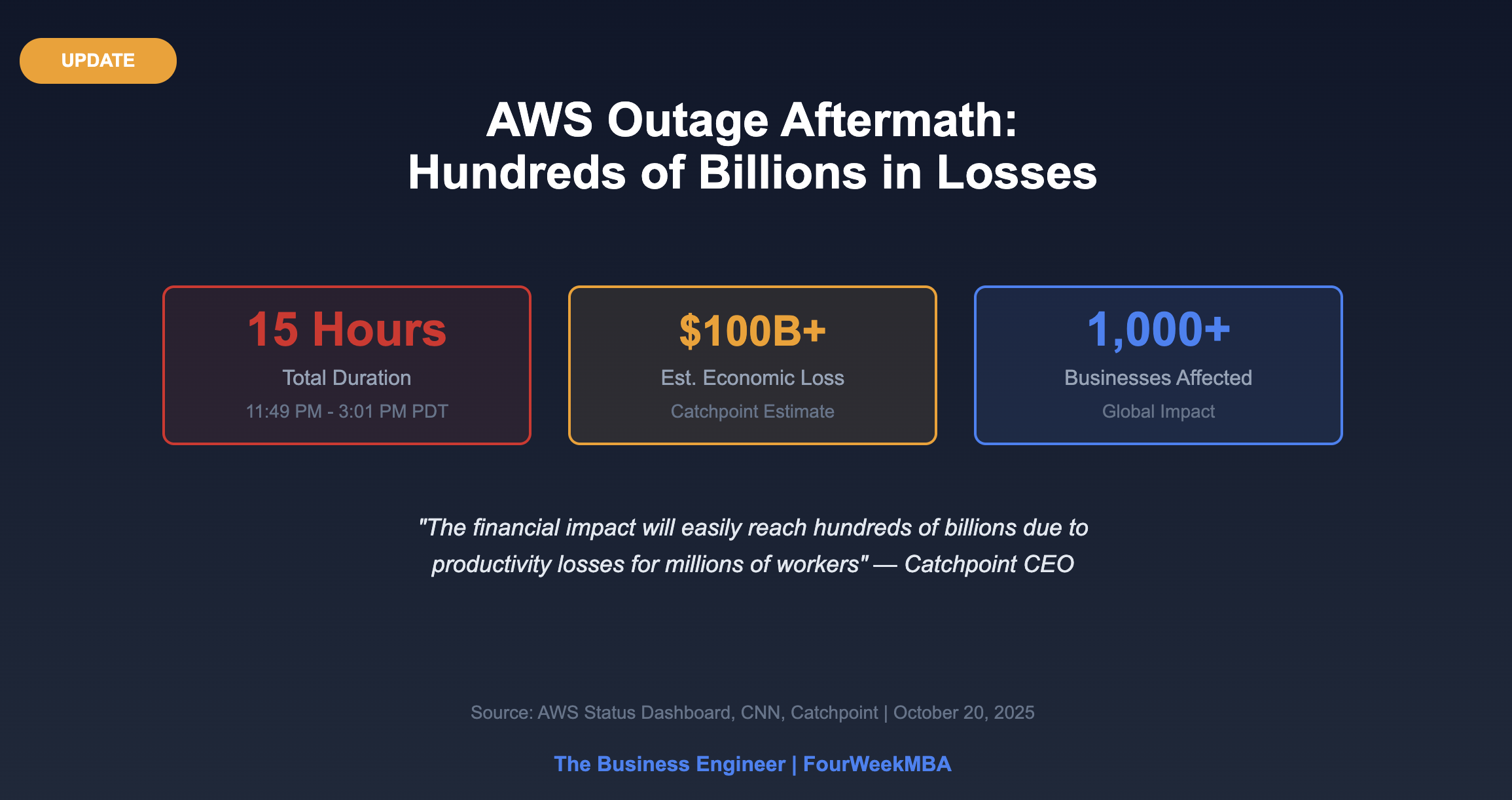
For enterprises in Malaysia, incidents involving large-scale cloud and virtualized infrastructure environments reinforce several important operational lessons:
Operational Visibility and Early Detection Matter
Modern virtualized environments require continuous operational visibility across infrastructure, workloads, networking, and supporting services. Proactive monitoring helps infrastructure teams identify anomalies, performance degradation, dependency issues, and operational risks earlier, improving response coordination and reducing the likelihood of extended service disruption.
Faster Incident Response Improves Operational Resilience
When infrastructure incidents occur, response speed and operational coordination become critical. Structured 24/7 support models help organizations improve incident escalation, troubleshooting efficiency, operational communication, and recovery planning across both on-premises and hybrid infrastructure environments.
Hybrid Infrastructure Requires Continuous Operational Support
As Malaysian enterprises continue adopting cloud-integrated and hybrid virtualization environments, infrastructure operations become increasingly distributed and interconnected. Continuous operational support capability plays an important role in maintaining workload stability, supporting business continuity objectives, and strengthening long-term operational resilience across critical enterprise systems.
Wiki Labs Sdn Bhd: Supporting Enterprise Virtualization Operations in Malaysia
As a Red Hat Premier Partner, Wiki Labs Sdn Bhd supports enterprise virtualization and hybrid infrastructure environments through operational services focused on platform stability, infrastructure governance, and long-term operational continuity.
The organization’s experience with Red Hat OpenShift and hybrid cloud environments enables support for both virtual machines and containerized workloads within unified infrastructure platforms. This operational approach helps enterprises manage increasingly complex environments while maintaining scalability, workload visibility, and operational consistency across infrastructure operations.
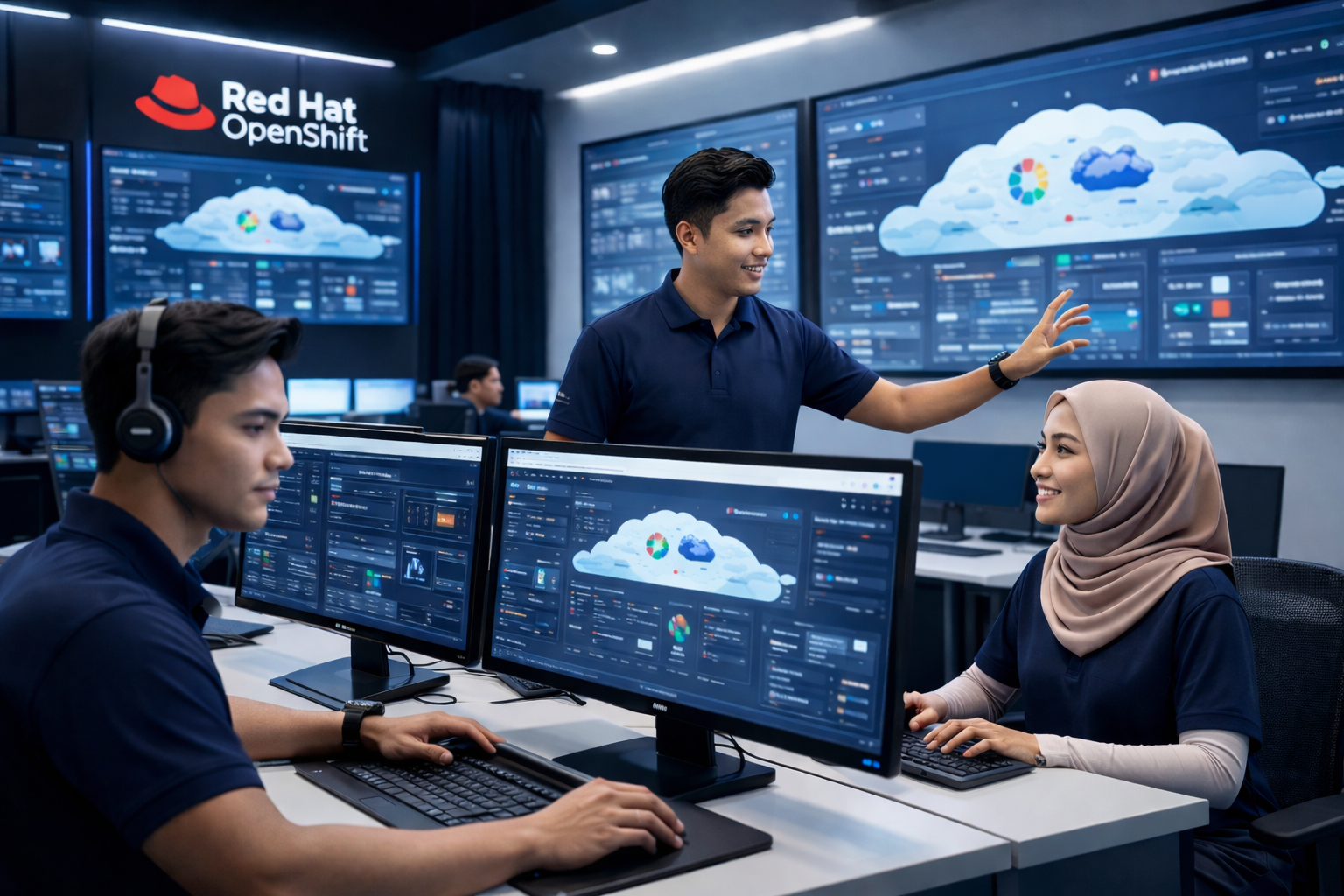
Supporting 24/7 Virtualization Operations
Hybrid Infrastructure and OpenShift Operations: Wiki Labs supports enterprise environments built on Red Hat OpenShift and hybrid infrastructure architectures, helping organizations manage virtualization platforms, container operations, infrastructure scaling, and operational governance requirements within integrated environments.
Continuous Operational Support and Monitoring: Operational support services include infrastructure monitoring, remote operational assistance, incident response coordination, onsite technical support, and platform operational visibility designed to help enterprises improve workload stability and reduce operational disruption across critical systems.
Operational Maintenance and Platform Governance: Support activities also include patch coordination, system maintenance, operational optimization, and infrastructure lifecycle management to help organizations maintain platform consistency, governance alignment, and operational resilience across evolving infrastructure environments.
For enterprises operating virtualization and hybrid infrastructure platforms in Malaysia, operational support capability increasingly plays an important role in maintaining business continuity, infrastructure stability, and long-term operational readiness within modern digital environments.
The Importance of Hybrid Cloud in Virtualization Environments
As more enterprises in Malaysia expand hybrid cloud adoption, virtualization operations increasingly span across private infrastructure, public cloud platforms, containerized workloads, and distributed application environments. Managing these interconnected environments requires continuous operational visibility, governance alignment, and coordinated infrastructure support across multiple platforms.
Hybrid infrastructure environments are operationally more complex because workloads, policies, security controls, and operational dependencies often exist across different infrastructure layers simultaneously. As a result, organizations increasingly require continuous operational support models capable of maintaining infrastructure stability, workload consistency, and governance visibility across evolving hybrid environments.
Why Hybrid Cloud Needs 24/7 Virtualization Support:
Workload and Resource Coordination
Managing workloads across hybrid infrastructure environments is an ongoing operational process rather than a one-time deployment activity. Infrastructure teams must continuously monitor resource utilization, workload placement, scaling requirements, and operational dependencies to maintain application performance and infrastructure efficiency.
Governance and Security Across Hybrid Environments
Hybrid cloud environments also require consistent operational governance across private and public infrastructure layers. Continuous operational oversight helps organizations support patch coordination, access management, infrastructure visibility, and broader security governance activities across distributed environments.
Automation, Scalability, and Operational Continuity
Modern hybrid environments increasingly depend on automation and dynamic scaling capabilities to support changing workload demands. Platforms such as Red Hat OpenShift help organizations manage virtual machines and containerized workloads within unified operational environments, while continuous support capability helps maintain infrastructure stability, operational responsiveness, and long-term platform resilience.
What Businesses Need from 24/7 Virtualization Support
For enterprise organizations operating virtualized and hybrid infrastructure environments in Malaysia, 24/7 operational support has become an important part of infrastructure resilience, operational continuity, and long-term platform governance.
As infrastructure environments become increasingly interconnected and operationally complex, organizations are placing greater emphasis on support capabilities that extend beyond reactive troubleshooting alone.
Proactive Operational Visibility and Incident Management
Enterprise environments require continuous operational monitoring and visibility across workloads, virtualization platforms, infrastructure dependencies, and supporting systems. Proactive operational support helps infrastructure teams identify performance anomalies, resource constraints, and operational risks earlier, improving response coordination and reducing the likelihood of prolonged disruption.
Fast Operational Response and Recovery Coordination
When infrastructure incidents occur, rapid escalation and coordinated response capability become critical. Organizations increasingly expect operational support teams capable of supporting incident management, troubleshooting coordination, workload recovery planning, and operational communication across hybrid infrastructure environments.
Hybrid Infrastructure and Platform Expertise
As hybrid cloud adoption continues expanding, enterprises also require operational expertise capable of supporting virtualization platforms, cloud-integrated environments, workload orchestration, and infrastructure governance across both private and public infrastructure layers.
This is particularly important for organizations managing distributed workloads, compliance-sensitive environments, and evolving digital infrastructure operations that require long-term operational consistency and scalability.
Conclusion: Why 24/7 Virtualization Support Matters for Enterprise Operations in Malaysia
As enterprises in Malaysia continue expanding virtualization and hybrid cloud adoption, operational support capability is becoming increasingly important to maintaining infrastructure stability, workload continuity, and long-term operational resilience.
Modern infrastructure environments are highly interconnected and operationally dependent on continuous platform availability, coordinated incident response, and consistent operational governance across both on-premises and cloud-integrated environments.
For this reason, 24/7 virtualization support is increasingly viewed not simply as a technical support function, but as part of a broader operational continuity and infrastructure governance strategy. Continuous operational visibility, proactive incident management, infrastructure lifecycle coordination, and hybrid platform expertise all play important roles in supporting enterprise infrastructure performance and reducing operational disruption.
As virtualization environments continue evolving across Malaysia’s enterprise sector, organizations are placing greater emphasis on operational support models capable of improving workload stability, strengthening governance consistency, and supporting scalable long-term infrastructure operations within increasingly complex digital environments.
WikiBlox: Malaysia’s Modern Approach to VMware Migration Alternative Service Providers Malaysia
WikiBlox delivers a modern virtualisation foundation designed specifically for Malaysian enterprises. It unifies virtual machine and container workloads within a single platform, simplifying management, migration, and scalability.
Built around strong governance and local compliance frameworks, WikiBlox helps organisations modernise their IT environments confidently. For enterprises evaluating VMware alternatives, it provides a future-ready platform developed and supported within Malaysia.
WikiBlox: What You Should Know
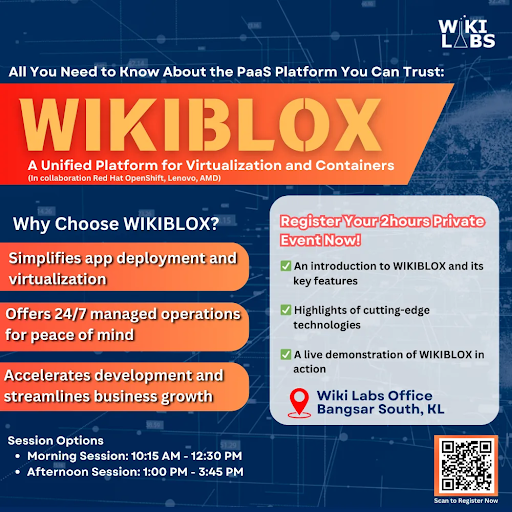
WikiBlox by Wiki Labs Sdn Bhd is engineered on an enterprise-grade architecture that integrates Red Hat OpenShift with Lenovo infrastructure powered by AMD EPYC processors, all operated within Malaysia. The platform unifies virtual-machine and container workloads under managed operations with built-in governance, security, and compliance aligned to Malaysian enterprise standards.
A recent local deployment within the financial services sector demonstrated significantly faster provisioning and measurable cost efficiencies compared with traditional virtualisation environments. For organisations exploring VMware alternatives, WikiBlox distinguishes itself through local support, regulatory alignment, and optimisation for hybrid-cloud and container workloads.
How Wiki Labs Helps Manage Virtualisation Costs
Wiki Labs provides full-lifecycle services for enterprise virtualisation — from assessing existing VMware environments to designing migration frameworks and optimising operations post-deployment.
Through cost-transparency analysis, predictable licensing models, and Malaysia-based support, Wiki Labs helps organisations identify and reduce hidden expenses associated with legacy systems. Its consultants offer clear insights into the total cost of ownership (TCO) across leading VMware alternatives, ensuring each client selects the most cost-effective and scalable approach for long-term growth.
With deep local expertise and platform-agnostic hardware integration, Wiki Labs enables Malaysian enterprises to achieve operational clarity and sustainable cost efficiency in their modernisation journey.
Ready to Move Forward with Modern VMware Alternatives?
WikiBlox isn’t just another platform. It’s your all-in-one foundation for Malaysia’s enterprise IT future.
👉 Schedule a free consultation with Wiki Labs experts today to see how WikiBlox can power your transformation.
Disclaimer:
The information in this article is provided for general informational purposes only. All product names, trademarks, and registered trademarks are the property of their respective owners. References to third-party technologies such as VMware, Red Hat, Lenovo, AMD, and others are made solely to describe compatibility or comparison context and do not imply any endorsement or affiliation.
Wiki Labs Sdn Bhd makes reasonable efforts to ensure the accuracy of information at the time of publication; however, readers are encouraged to verify technical details and licensing information directly with the respective vendors.
