
Active Directory Security Risks in Malaysia | Wiki Labs
Is Your Active Directory Secure? TheHidden Identity Risks Malaysian Enterprises Shouldn't Ignore

When organisations think about cybersecurity, firewalls, endpoint protection and threat detection systems often come to mind.
But what about the identities and access privileges operating behind these security controls?
For many enterprises, Microsoft Active Directory (AD) and Microsoft Entra ID play a central role in managing user identities, authentication and access to critical business systems.
Yet as IT environments grow, identity configurations can become increasingly complex. Privileged accounts accumulate, inactive users remain in directories, security policies become inconsistent, and misconfigurations may go unnoticed.
These weaknesses can create opportunities for attackers to gain unauthorised access, escalate privileges or move across enterprise systems.
The question is no longer simply whether your organisation has security controls in place. It is whether your identity environment is configured securely enough to support them.
For Malaysian enterprises, particularly those operating in regulated industries, understanding these hidden exposures is an important step towards strengthening cybersecurity resilience.
The Hidden Security Risks Within Active Directory
Active Directory environments are rarely static. Employees join or leave, departments change, applications are introduced and administrators adjust access permissions to meet evolving business requirements.
Over time, these changes can introduce security gaps that are difficult to identify without a structured assessment.
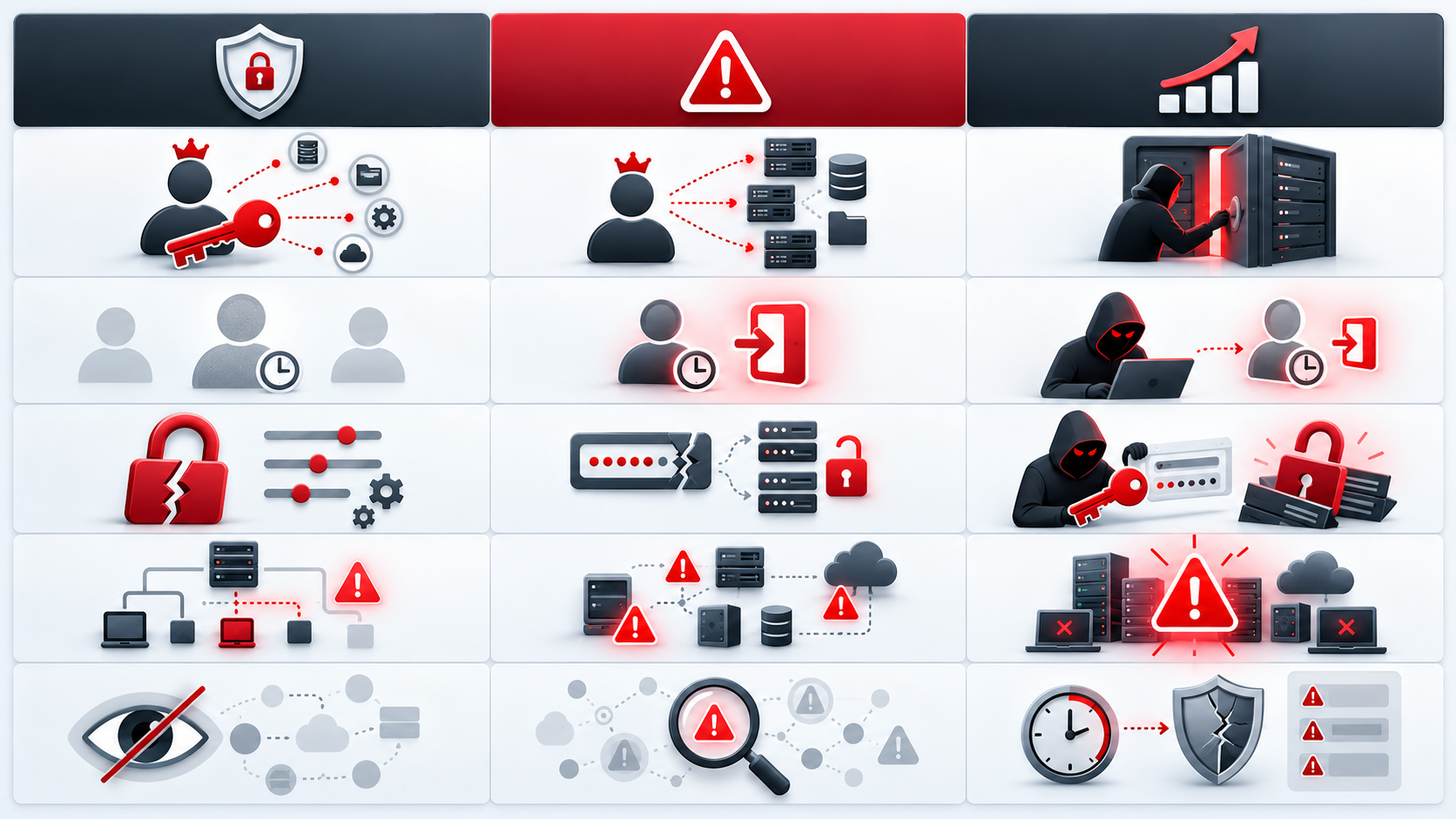
Some of the most common challenges include:
Security Challenge | Potential Risk | Business Impact |
Excessive Privileges & Weak Access Controls | Users retain unnecessary administrative permissions | Increased risk of unauthorised access and privilege escalation |
Stale or Inactive User Accounts | Unused accounts remain enabled and accessible | Potential entry points for attackers |
Weak Password & GPO Configurations | Inconsistent or outdated security policies | Increased exposure to credential compromise |
Security Misconfigurations | Hidden weaknesses across the AD environment | Greater likelihood of security incidents |
Limited Security Visibility | Difficulty identifying and prioritising identity-related threats | Delayed remediation and weaker security governance |
These challenges often develop gradually as enterprise environments evolve without consistent security hygiene reviews.
Without sufficient visibility, IT teams may struggle to identify which weaknesses require immediate attention and which can be addressed through longer-term improvements.
The real challenge is not just the presence of security gaps, but the organisation's ability to identify, prioritise and address them before they become serious risks.

Why Active Directory Security Hygiene Matters for Malaysian Enterprises
Cybersecurity is not only about preventing external attacks. It also involves ensuring that internal systems, identities and access controls remain secure, consistent and auditable.
For Malaysian enterprises, identity security is particularly relevant when considering governance, operational resilience and compliance requirements.
Organisations operating within regulated sectors may need to demonstrate that access privileges are appropriately managed, security configurations are reviewed and identified weaknesses are addressed.
Several established frameworks and standards provide useful reference points:
Bank Negara Malaysia's Risk Management in Technology (RMiT): Establishes relevant technology risk management and security expectations for financial institutions within its scope.
CIS Controls: Provides prioritised cybersecurity safeguards to help organisations strengthen security practices.
NIST Cybersecurity Framework: Offers a structured approach to understanding, managing and reducing cybersecurity risks.
PCI DSS: Establishes security requirements for organisations handling payment card data within its applicability.
A structured Active Directory security hygiene assessment can help organisations identify weaknesses in identity-related controls and gather supporting evidence for internal security reviews, audit preparation and remediation planning.
However, conducting an assessment does not automatically establish regulatory compliance. Organisations must still evaluate findings against applicable requirements, implement appropriate improvements and validate the effectiveness of their security controls.
Strong identity security is not simply about having policies in place. It is about ensuring those policies are consistently reflected in the actual IT environment.

From Assumptions to Evidence: Why Security Assessments Matter
One of the biggest challenges in enterprise cybersecurity is the difference between assuming an environment is secure and having evidence to support that assumption.
An organisation may already have password policies, access management procedures and security monitoring tools in place. But how consistently are these controls applied across its Active Directory environment?
For example, a company may have a policy requiring administrative access to be restricted to authorised personnel. Yet without regular reviews, employees who have changed roles may continue retaining privileges that are no longer necessary.
Similarly, accounts created for temporary projects may remain active long after those projects have ended.
These situations highlight why security policies alone are insufficient without visibility into actual configurations.
A structured security hygiene assessment helps IT teams answer several important questions:
Are privileged accounts appropriately controlled?
Are inactive or unnecessary accounts still present?
Are password and Group Policy configurations aligned with security expectations?
Are there misconfigurations that could introduce avoidable risks?
Which security gaps should be prioritised for remediation?
Rather than relying entirely on assumptions, organisations can use assessment findings to understand their existing security posture and develop an informed improvement plan.
The objective is not simply to discover security weaknesses. It is to turn those findings into actionable decisions that strengthen enterprise security.

Introducing Wiki Labs Active Directory & Entra ID Security Hygiene Assessment
Recognising the importance of identity security, Wiki Labs offers an Active Directory & Microsoft Entra ID Security Hygiene Assessment to help enterprises identify hidden exposures, evaluate existing security practices and prioritise improvements.
The assessment uses a purpose-built, non-intrusive, read-only approach to examine the organisation's Active Directory and Microsoft Entra ID environments.
Findings are analysed and mapped against relevant security control frameworks to support risk prioritisation and remediation planning.
Rather than simply providing a list of technical findings, Wiki Labs focuses on delivering meaningful insights that help organisations understand their identity security posture and determine practical next steps.
What Can Your Organisation Gain From the Assessment?
Key Benefit | What Wiki Labs Provides |
Identify Security Gaps & Vulnerabilities | Discover and prioritise risks, vulnerabilities and configuration weaknesses within AD environments |
Security Standards Alignment | Map relevant findings against frameworks including RMiT, PCI DSS, CIS and NIST |
Evidence-Aware Findings | Provide validated, evidence-based assessment results to support audit preparation and compliance reviews |
Actionable Remediation Recommendations | Deliver prioritised recommendations to address identified security gaps and strengthen identity security |
Expert Advisory & Optimisation | Provide guidance on Tier Model redesign, AD optimisation and security improvements |
Management-Level Reporting | Present security posture summaries and high-priority findings to support informed management decisions |
The assessment can also be tailored to the organisation's environment, operational requirements and security priorities.
For IT teams, this provides a clearer view of existing weaknesses and potential improvements. For management, it offers greater visibility into identity-related risks that could affect security governance and business continuity.
Ultimately, the assessment helps organisations move from uncertainty towards a more structured, evidence-informed approach to identity security.

How the Wiki Labs Assessment Works
Wiki Labs follows a structured five-phase engagement approach, beginning with understanding the organisation's environment and progressing towards assessment, remediation planning and reporting.
Phase | Assessment Stage | Key Activities |
01 | Initiation & Scope Definition | Understand the existing environment, business objectives and assessment requirements |
02 | Assessment | Perform non-intrusive, read-only scanning and analysis of Active Directory and Entra ID |
03 | Gap Analysis & Remediation | Identify security gaps, analyse findings and develop prioritised remediation recommendations |
04 | Build & Design | Design optimised improvements involving Tier Model, OU structure, GPO and RBAC |
05 | Rollout & Reporting | Support agreed improvements and deliver consolidated assessment reporting |
This approach helps ensure that security findings are not treated as isolated technical issues.
Instead, they form the basis for a structured improvement plan that considers security priorities, operational requirements and the organisation's existing environment.
Where further remediation or implementation is required, the scope of those activities can be agreed upon separately.

Stronger Identity Security Starts With Better Visibility
Security hygiene is not a one-time exercise.
As organisations introduce new applications, onboard employees, change infrastructure and adopt hybrid cloud environments, identity security requirements continue to evolve.
Without regular reviews, previously secure configurations may no longer reflect current business needs or security expectations.
A proactive Active Directory security assessment provides a starting point for understanding the current environment, identifying gaps and establishing improvement priorities.
For IT leaders, the value extends beyond technical findings. It provides a more informed basis for discussing security investments, prioritising remediation resources and demonstrating progress towards stronger identity governance.
For organisations managing increasingly complex IT environments, improving identity security visibility can also support broader efforts to strengthen cybersecurity resilience and operational control.
You cannot effectively prioritise risks that you have not identified.
Why Wiki Labs?
How confident are you in your organisation's Active Directory security posture?
Identifying security gaps is the first step towards building a stronger, more resilient identity environment.
Whether you're reviewing your existing AD configurations, addressing security concerns or planning your next cybersecurity initiative, Wiki Labs is here to help.
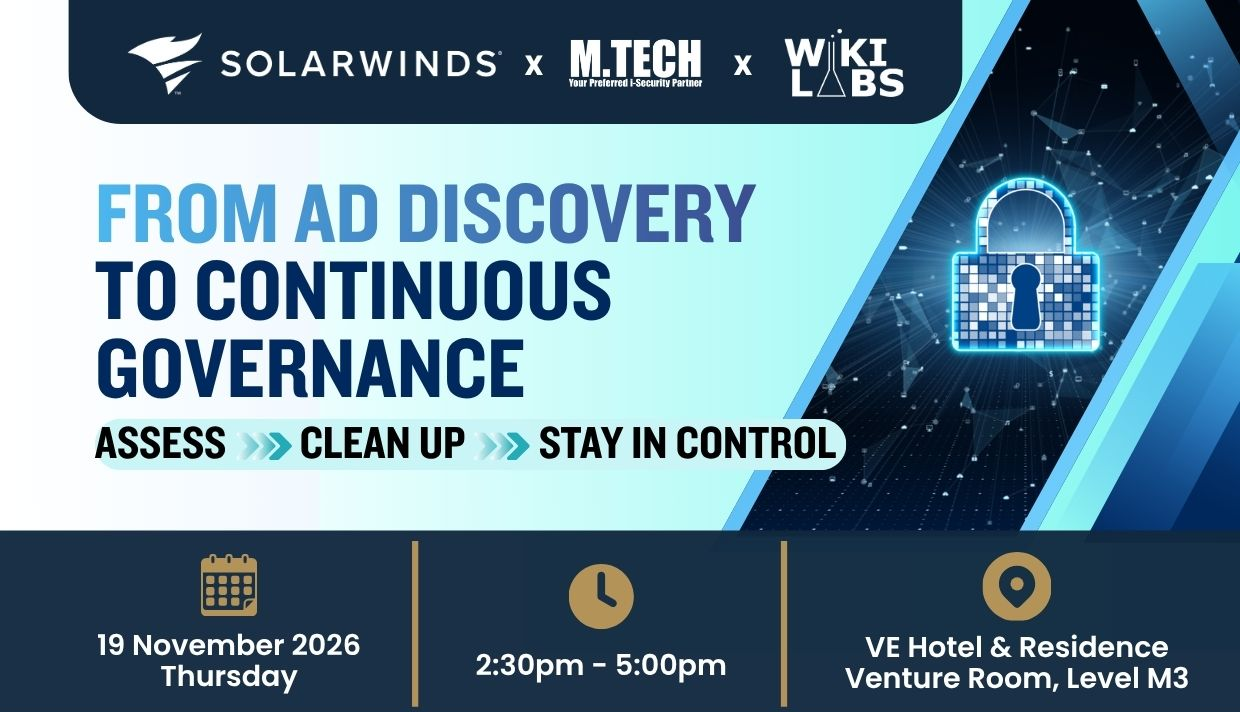
Let's continue the conversation over lunch and explore how our Active Directory & Entra ID Security Hygiene Assessment can help your organisation identify hidden risks and prioritise improvements.
Wiki Labs — Innovation Inspires Progress.
