Automated Patch Management Malaysia | Red Hat Ansible
Your Servers Are Patched. But Can You Prove It?

Why automated patch management is becoming essential for enterprise security, operational resilience and audit readiness.
When a critical vulnerability is discovered, IT teams face immediate pressure to identify affected systems, deploy security patches and minimise business disruption.
But once the patching process is completed, another important question remains:
Can your organisation prove that every affected server was successfully patched?
For enterprises managing hundreds or thousands of servers across data centres, branches and hybrid environments, completing a patch deployment does not necessarily mean every system is protected.
Some servers may have been unavailable during maintenance. Others may have failed to install an update, required a restart or been excluded from the deployment.
Without reliable validation and reporting, these exceptions can remain unnoticed.
This is why modern patch management must go beyond installing updates. Enterprises need a controlled, repeatable and verifiable approach to vulnerability remediation.
Why Traditional Patch Management Leaves Enterprises Exposed
Many organisations have established patch management policies. However, the execution of these policies may still depend heavily on manual work.
Infrastructure teams often need to identify affected servers, coordinate maintenance windows, log in to systems, deploy updates, perform validation and prepare reports.
As infrastructure environments grow, so does the complexity of managing these activities consistently.
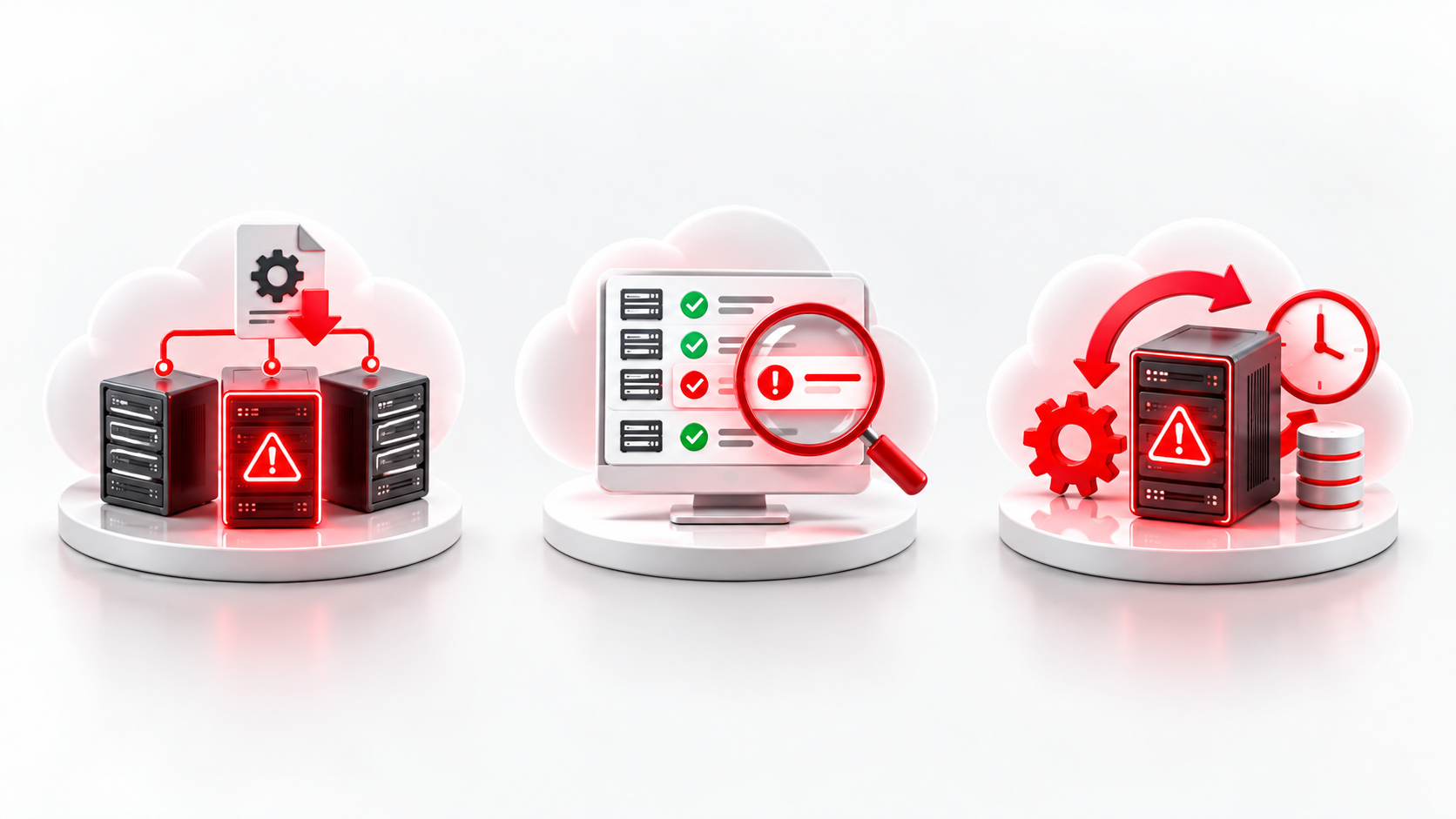
Three challenges deserve particular attention.
1. Incomplete Patch Coverage
A patch deployment may be recorded as completed even when some systems have failed or were never included.
This can happen because of outdated inventories, network connectivity issues, incompatible dependencies or servers being temporarily offline.
Unless these exceptions are identified and followed up, vulnerabilities may remain unresolved.
2. Limited Visibility Into Remediation Status
Security and infrastructure teams may rely on separate spreadsheets, ticketing systems or manually prepared reports to track patching progress.
This makes it difficult to establish a consistent view of which systems have been patched, which remain vulnerable and which require further investigation.
During an audit or security review, gathering the necessary evidence can become another time-consuming activity.
3. Operational Risk During Patch Deployment
Patching production environments requires careful coordination.
An unsuccessful update, unexpected restart or incompatible software change can affect business-critical applications.
Consequently, IT teams may delay security updates while waiting for suitable maintenance windows, leaving vulnerable systems exposed for longer.
The challenge is not simply to patch faster. It is to execute patching consistently while maintaining appropriate operational controls.

Real-World Example: PETRONAS Dagangan, Malaysia
How automation helped address patch management challenges across a nationwide operating environment.
PETRONAS Dagangan provides a relevant Malaysian example of why enterprise patch management becomes increasingly difficult at scale.
According to Red Hat's 2023 APAC Innovation Awards announcement, PETRONAS Dagangan operated 1,076 petrol stations nationwide.
Operating system patching across these locations had previously relied heavily on manual processes.
These activities were resource-intensive and costly, while manual software deployments increased the possibility of errors. The organisation also faced security and compliance concerns associated with its CentOS environment.
To address these challenges, PETRONAS Dagangan adopted Red Hat Ansible Automation to improve the consistency and efficiency of its IT operations.
The initiative helped the organisation automate repetitive activities, streamline patch deployment and strengthen its approach to infrastructure management.
Red Hat identified improvements in operational efficiency, scalability and security as important outcomes of the initiative.
What Enterprises Can Learn
The PETRONAS Dagangan example illustrates an important operational principle:
As infrastructure becomes more distributed, manual patching becomes increasingly difficult to scale and govern.
For organisations operating multiple branches, data centres or business locations, standardised automation can help reduce repetitive tasks and improve consistency.
However, automation should also support verification, exception management and reporting so that IT teams can demonstrate the results of each patching cycle.
Source: Red Hat APAC Innovation Awards 2023 — PETRONAS Dagangan. The case demonstrates Red Hat technology adoption by PETRONAS Dagangan and is not presented as a Wiki Labs customer engagement.

How Red Hat Ansible Automation Platform Supports Patch Management
Red Hat Ansible Automation Platform helps organisations transform patching from a collection of repetitive manual tasks into a coordinated and repeatable process.
Rather than requiring engineers to execute the same procedures individually across multiple servers, Ansible uses reusable automation playbooks and managed workflows to perform defined actions consistently.
A well-designed automated patch management process can include several essential stages.
Identify and Prioritise Affected Systems
Effective vulnerability remediation starts with knowing which assets are affected.
Ansible Automation Platform can work with infrastructure inventories and integrate with relevant security or vulnerability management tools to help identify systems requiring attention.
Enterprises can then prioritise remediation according to vulnerability severity, exposure, asset criticality and business requirements.
Standardise Patch Deployment
Once the affected systems have been identified, automation playbooks can execute approved patching procedures across defined groups of servers.
This helps organisations apply consistent processes rather than relying on different engineers to interpret and perform the same tasks manually.
Automation can also support Linux and Windows environments, subject to the operating systems, integrations and configurations involved.
Maintain Control Over Production Changes
Not every server should be patched simultaneously.
Business-critical workloads may require approved maintenance windows, dependencies to be checked and deployment in carefully controlled batches.
Ansible Automation Platform supports coordinated workflows and approval steps, allowing organisations to introduce automation without removing necessary human oversight.
Validate and Record the Outcome
After patch deployment, automated checks can help verify the installation of updates and identify systems requiring additional action.
Execution records can provide visibility into successful tasks, failures and exceptions.
When combined with appropriate inventory, reporting and vulnerability validation processes, these records help strengthen operational traceability and audit evidence.
Importantly, a successful automation job alone is not proof that every vulnerability has been remediated. Organisations should validate the final system state and track unresolved exceptions.
From Patch Deployment to Continuous Vulnerability Remediation
Patch management is one part of a broader vulnerability remediation lifecycle.
An enterprise may have effective vulnerability scanning capabilities but still face delays when translating findings into action.
For example, a security team may identify a critical vulnerability affecting multiple production servers.
However, the infrastructure team must still determine which systems are affected, assess dependencies, obtain approvals, schedule the change and execute remediation.
Without a coordinated process, these activities can become disconnected.
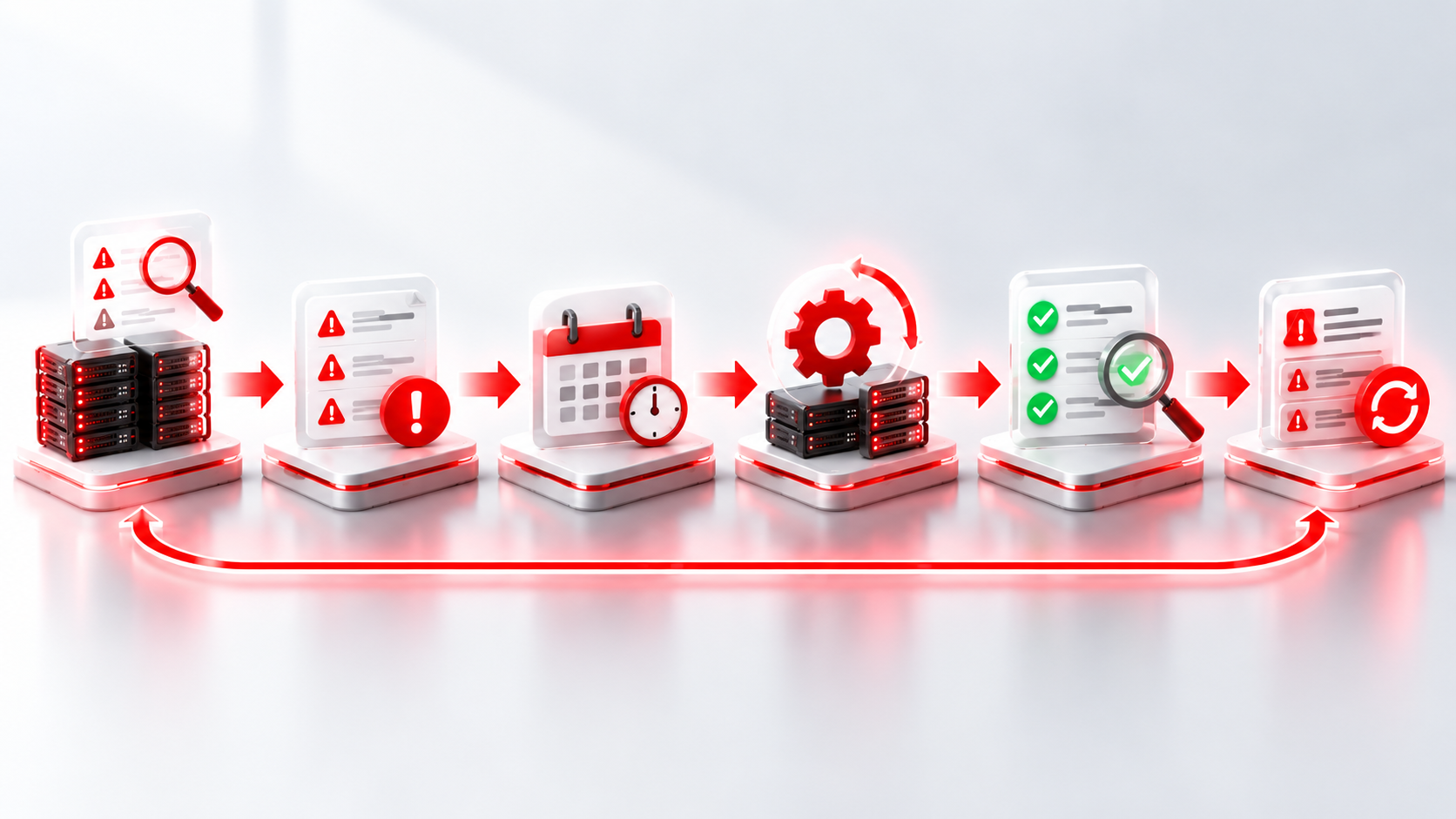
An integrated approach combines vulnerability identification, remediation planning, controlled execution, validation and exception tracking.
By connecting these activities with automation, organisations can reduce repetitive manual coordination and improve their ability to respond to emerging security risks.
This is particularly valuable for enterprises operating distributed or hybrid IT environments, where consistency and visibility are essential.

Why Enterprises Can Trust Wiki Labs
Adopting enterprise automation involves more than deploying a software platform.
Organisations need an experienced technology partner that understands infrastructure operations, security requirements and the practical challenges of maintaining business-critical systems.
Wiki Labs combines enterprise open-source expertise, Red Hat technologies and its Standard Operating Environment (SOE) approach to help organisations establish more consistent and manageable IT operations.
Established Enterprise Infrastructure Expertise
Founded in 2009, Wiki Labs has more than 15 years of experience supporting enterprise IT environments.
As a recognised Red Hat Partner, Wiki Labs works with enterprise technologies across infrastructure, hybrid cloud and operational management.
Its capabilities are supported by trained and certified technical professionals, with Red Hat qualifications covering technologies including Red Hat Enterprise Linux and Ansible Automation Platform.
Practical Experience in Security and IT Standardisation
Wiki Labs' experience extends beyond technology implementation.
In a customer story published by Red Hat, Wiki Labs supported a Malaysian internet service provider through an infrastructure refresh involving its Standard Operating Environment approach.
The engagement improved infrastructure security and compliance, increased productivity and reduced IT team workload by approximately 25–50%, according to the published case study.
The same resource also describes Wiki Labs' work supporting a major Malaysian insurance organisation.
By evaluating its operating environment and implementing a customised SOE, Wiki Labs helped improve IT asset visibility, support timely patch updates and establish more standardised infrastructure management practices.
These examples demonstrate experience addressing operational challenges in enterprise environments where reliability, consistency and governance are important.
A Structured Approach to IT Operations
Wiki Labs' SOE framework addresses several connected areas of infrastructure management, including:
Patch management and software lifecycle management
Security configuration and system hardening
Infrastructure provisioning and standardisation
Asset inventory and operational visibility
Incident response and continuous improvement
Rather than approaching patching as an isolated activity, this framework helps organisations align patch management with broader IT operational requirements.
Together with Red Hat Ansible Automation Platform, this provides a foundation for evaluating and implementing more standardised, controlled and scalable automation workflows.
Is Your Organisation Ready to Improve Patch Management?
For many enterprises, the problem is not a lack of patch management policies.
It is the difficulty of executing those policies consistently across increasingly complex infrastructure environments.
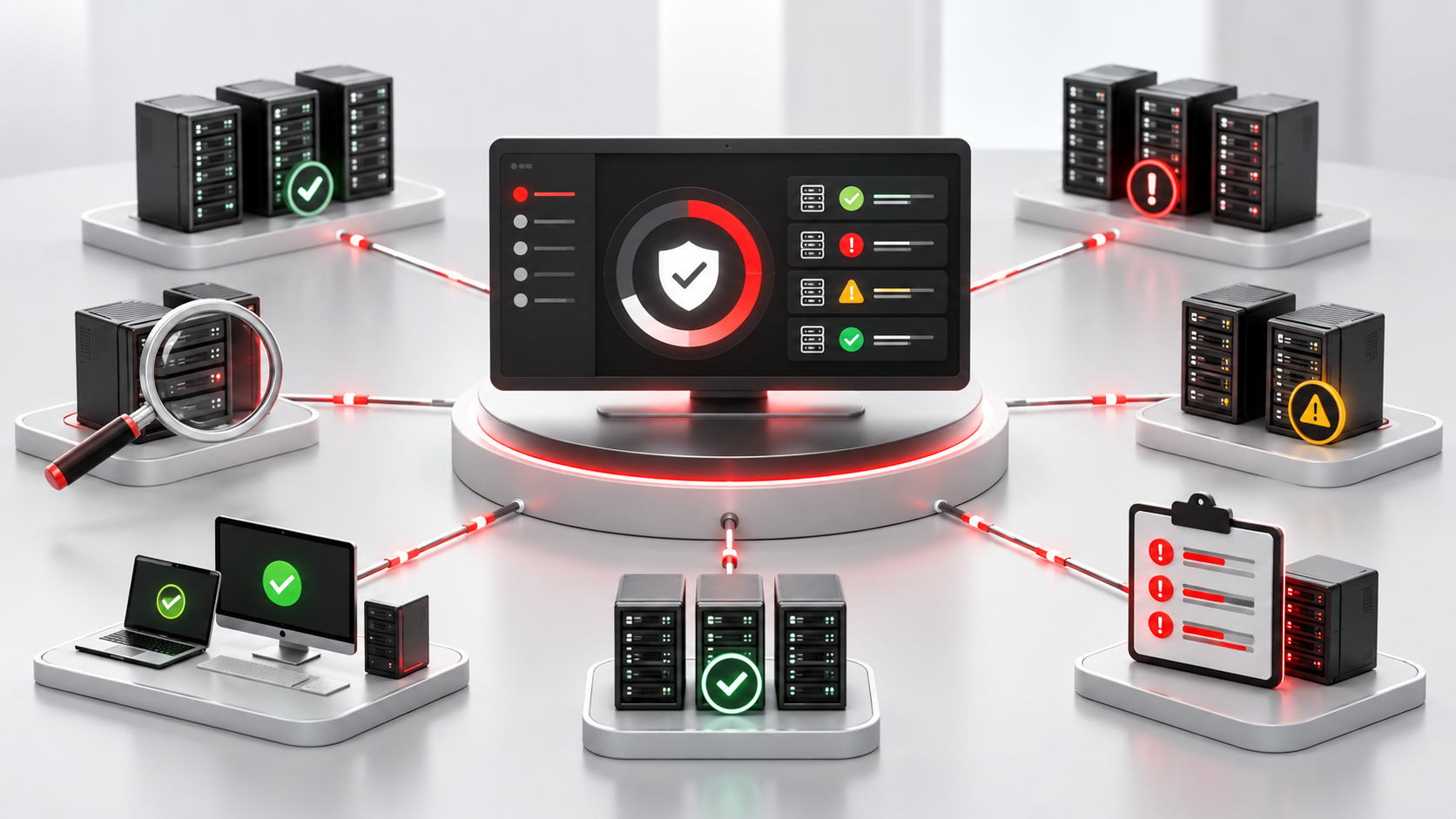
An effective patch management strategy should help IT teams answer several important questions:
Do we know which critical systems remain unpatched?
Can we distinguish successful deployments from failed or incomplete ones?
Are patching activities performed according to approved procedures?
Can we produce reliable evidence of remediation when required?
Are exceptions identified, assigned and tracked until resolution?
If these questions are difficult to answer, it may be time to reassess how patch management is being performed.
Automation is not simply about applying patches faster. It is about giving enterprises greater visibility, consistency and control over vulnerability remediation.
With Red Hat Ansible Automation Platform and Wiki Labs' enterprise infrastructure expertise, organisations can explore a more structured approach to patch management that supports both operational efficiency and security governance.
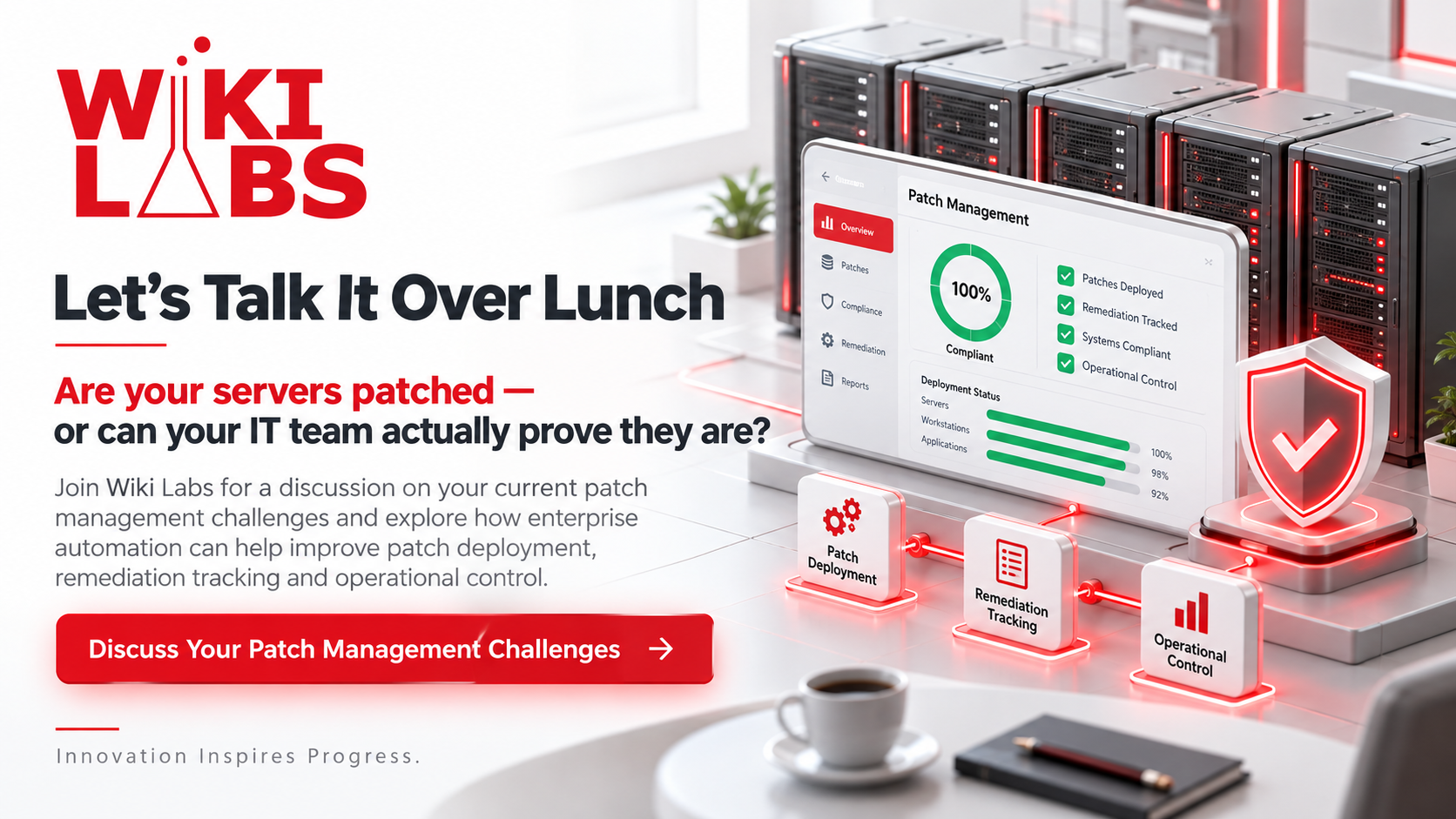
Let's Talk It Over Lunch
Are your servers patched — or can your IT team actually prove they are?
Join Wiki Labs for a discussion on your current patch management challenges and explore how enterprise automation can help improve patch deployment, remediation tracking and operational control.
Innovation Inspires Progress.
