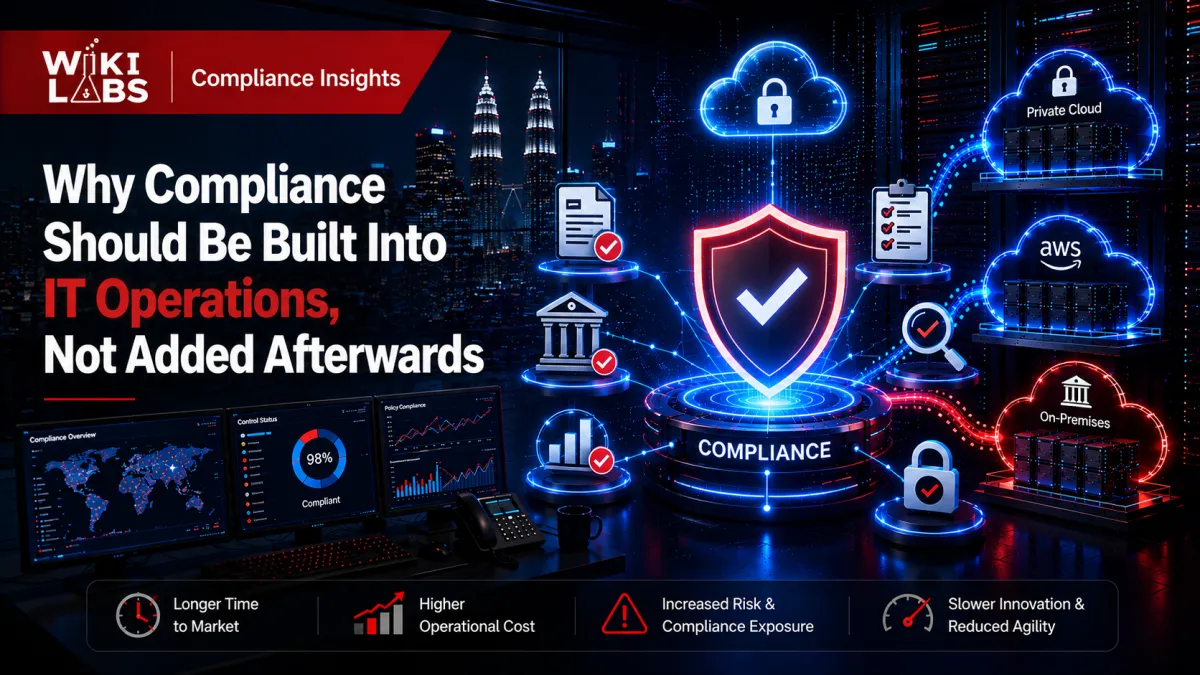
Why Compliance Should Be Built Into IT Operations, Not Added Afterwards
Why Compliance Should Be Built Into IT Operations, Not Added Afterwards

Industry Pain Point
For financial institutions, compliance has never been more critical.
Banks and insurance companies must comply with increasingly stringent regulatory requirements while managing rapidly expanding IT environments that span on-premises infrastructure, private cloud, public cloud, and hybrid platforms.
At the same time, organisations are expected to deploy new applications faster, strengthen cybersecurity, maintain operational resilience, and deliver uninterrupted digital services.
Despite these growing demands, many organisations still rely on manual processes to verify configuration standards, security policies, system patching, and infrastructure compliance.
Engineers often perform compliance checks using spreadsheets, manual documentation, or ad-hoc scripts before audits or regulatory assessments.
While these approaches may satisfy short-term requirements, they become increasingly difficult to sustain as infrastructure grows.
Today, compliance is no longer simply about passing an audit—it has become an essential part of maintaining secure, reliable, and well-governed IT operations.

Why This Problem Is Serious
Manual compliance processes are time-consuming, inconsistent, and heavily dependent on human intervention.
As organisations manage hundreds or even thousands of infrastructure assets, verifying that every system complies with internal policies and regulatory requirements becomes increasingly complex.
Small configuration changes, delayed security patches, or inconsistent operating standards can introduce compliance gaps without immediate visibility.
These issues often remain undetected until an internal review, regulatory inspection, or security incident occurs.
According to IBM's Cost of a Data Breach Report 2024, organisations with mature security and governance practices are generally better positioned to reduce the financial impact of security incidents and improve operational resilience.
For financial institutions, embedding compliance into daily IT operations helps reduce operational risk while providing greater confidence that infrastructure remains aligned with organisational standards.

What Happens If the Problem Is Not Addressed
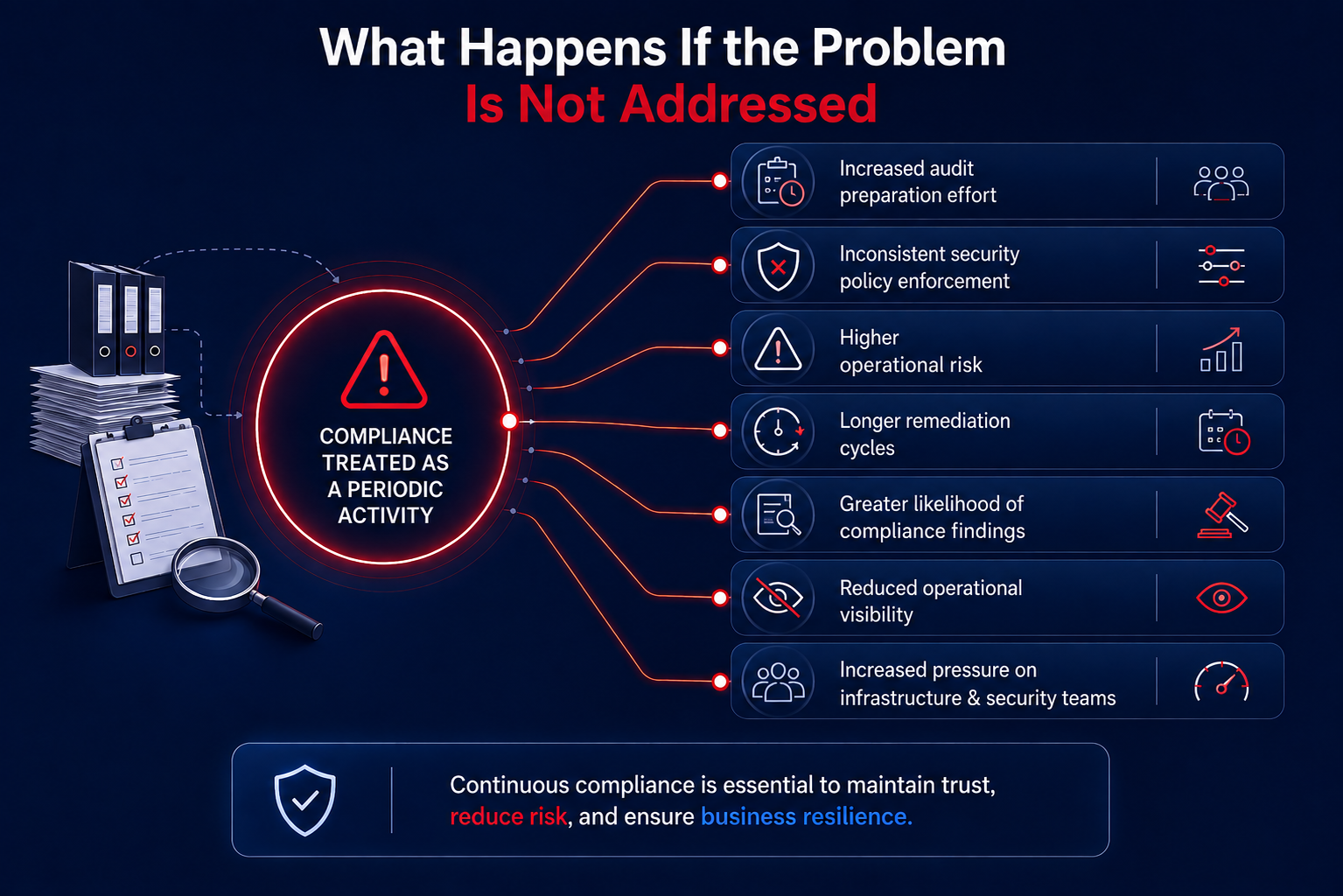
Treating compliance as a periodic activity rather than an ongoing operational process can create significant business challenges.
IT teams spend considerable time preparing evidence for audits, manually reviewing server configurations, and verifying security policies across multiple environments.
This reactive approach increases operational workload while leaving more opportunities for human error.
Over time, organisations may experience:
Increased audit preparation effort
Inconsistent security policy enforcement
Higher operational risk
Longer remediation cycles
Greater likelihood of compliance findings
Reduced operational visibility
Increased pressure on infrastructure and security teams
For financial institutions operating under strict regulatory oversight, maintaining continuous compliance is becoming just as important as maintaining system availability.

Real-World Example
Organisation: DBS Bank
Industry: Banking
Country: Singapore
Year: 2023
What Happened?
Following several digital banking service disruptions, the Monetary Authority of Singapore (MAS) required DBS Bank to strengthen its operational resilience and implement additional measures to improve technology risk management.
The incident highlighted that regulatory expectations now extend beyond cybersecurity alone. Regulators increasingly expect financial institutions to demonstrate strong operational governance, effective change management, system reliability, and continuous oversight of critical technology environments.
For banks operating in highly regulated industries, compliance is becoming an ongoing operational responsibility rather than an activity performed only during audits.
Business Impact
Increased regulatory oversight.
Strengthened technology governance requirements.
Greater focus on operational resilience.
Enhanced internal controls and risk management initiatives.
Key Lesson
Compliance should not be treated as a separate exercise performed before an audit. It should be embedded into everyday IT operations through consistent processes, automation, and governance to support long-term operational resilience.
How Wiki Labs Can Help
Maintaining compliance across modern IT environments requires more than periodic reviews—it requires consistency, automation, and continuous governance.
At Wiki Labs, we help financial institutions integrate compliance into daily IT operations by replacing repetitive manual activities with standardised and automated workflows.
Using Red Hat Ansible Automation Platform, organisations can automate security policy enforcement, configuration standardisation, patch management, compliance validation, and infrastructure governance across on-premises, cloud, and hybrid environments. By embedding compliance into operational workflows, IT teams gain greater visibility, reduce manual effort, improve consistency, and respond more quickly to regulatory requirements.
Rather than treating compliance as a one-time project, we help organisations establish sustainable automation practices that strengthen governance while enabling IT teams to focus on innovation and business priorities.
Why Malaysian Enterprises Choose Wiki Labs
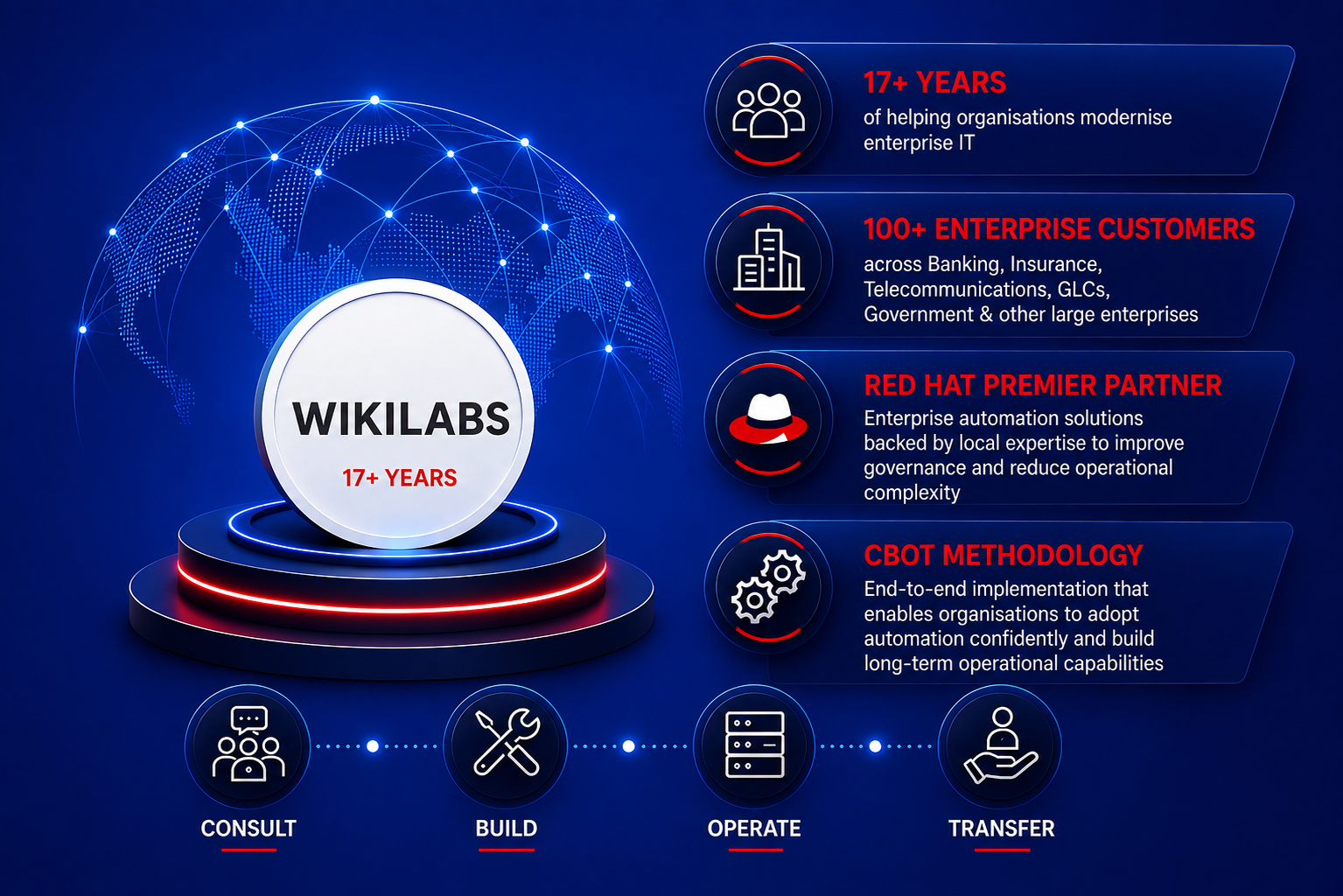
For more than 17 years, Wiki Labs has been helping organisations modernise enterprise IT through automation, infrastructure transformation, and operational excellence.
As a Malaysia-based Enterprise IT Services Provider, we have supported more than 100 enterprise customers across Banking, Insurance, Telecommunications, Government-Linked Companies (GLCs), and other large enterprises.
As a Red Hat Premier Partner, Wiki Labs delivers enterprise automation solutions backed by local expertise, helping organisations improve governance, standardise IT operations, and reduce operational complexity through intelligent automation.
Through our Consult, Build, Operate and Transfer (CBOT) methodology, we provide end-to-end implementation services that enable organisations to adopt automation confidently while building long-term operational capabilities.
Ready to Strengthen Compliance Through Automation?
As regulatory expectations continue to evolve, organisations need a more proactive approach to governance and compliance.
By embedding compliance directly into IT operations, financial institutions can reduce operational risk, improve consistency, strengthen security, and simplify audit readiness without increasing manual workload.
If your organisation is looking to modernise compliance management and build a more resilient IT operating model, speak with our consultants to discover how Wiki Labs can support your automation journey.
