When Cybersecurity Alerts Outpace Your IT Team's Response
When Cybersecurity Alerts Outpace Your IT Team's Response

Security tools can detect threats within seconds. But how quickly can your IT team investigate, coordinate and respond?
Financial institutions have invested heavily in cybersecurity technologies. From Security Information and Event Management (SIEM) platforms to Endpoint Detection and Response (EDR) solutions, organisations now have greater visibility into potential security threats than ever before.
Yet greater visibility does not necessarily translate into faster incident response.
Every day, security teams must review alerts, validate suspicious activities, investigate affected systems and coordinate remediation across multiple IT environments.
While security technologies continue to evolve, many of these processes still depend heavily on manual intervention.
For banks, insurers and other financial institutions, the challenge is no longer simply detecting cybersecurity threats.
It is ensuring that security alerts can be translated into timely, consistent and controlled responses.

More Security Alerts Do Not Always Mean Better Security
Modern enterprise environments generate large volumes of security information.
Firewalls, endpoint protection systems, identity management platforms, network monitoring tools and cloud security solutions continuously produce alerts about potentially suspicious activities.
However, not every alert represents a genuine security incident.
Security teams must distinguish between false positives, routine operational events and threats requiring immediate attention.
This creates several operational challenges:
Alert fatigue: Large alert volumes make it difficult to prioritise genuine threats.
Manual investigation: Security analysts must gather information from multiple systems before determining the appropriate response.
Fragmented workflows: Different security tools often require separate interfaces, procedures and operational teams.
Delayed remediation: Even after identifying a threat, containment and recovery actions may require several manual steps.
Inconsistent execution: Incident response procedures may vary depending on the personnel handling the situation.
Consider a suspicious login attempt detected within a banking environment.
The security monitoring platform raises an alert. An analyst reviews the activity, checks the affected account, examines related logs and determines whether the incident requires escalation.
If further action is necessary, the analyst may need to contact another team to restrict access, isolate an endpoint or initiate additional security checks.
Each step may be necessary, but the coordination between them introduces delays.
The real challenge is not the number of alerts detected, but how efficiently an organisation can act on them.
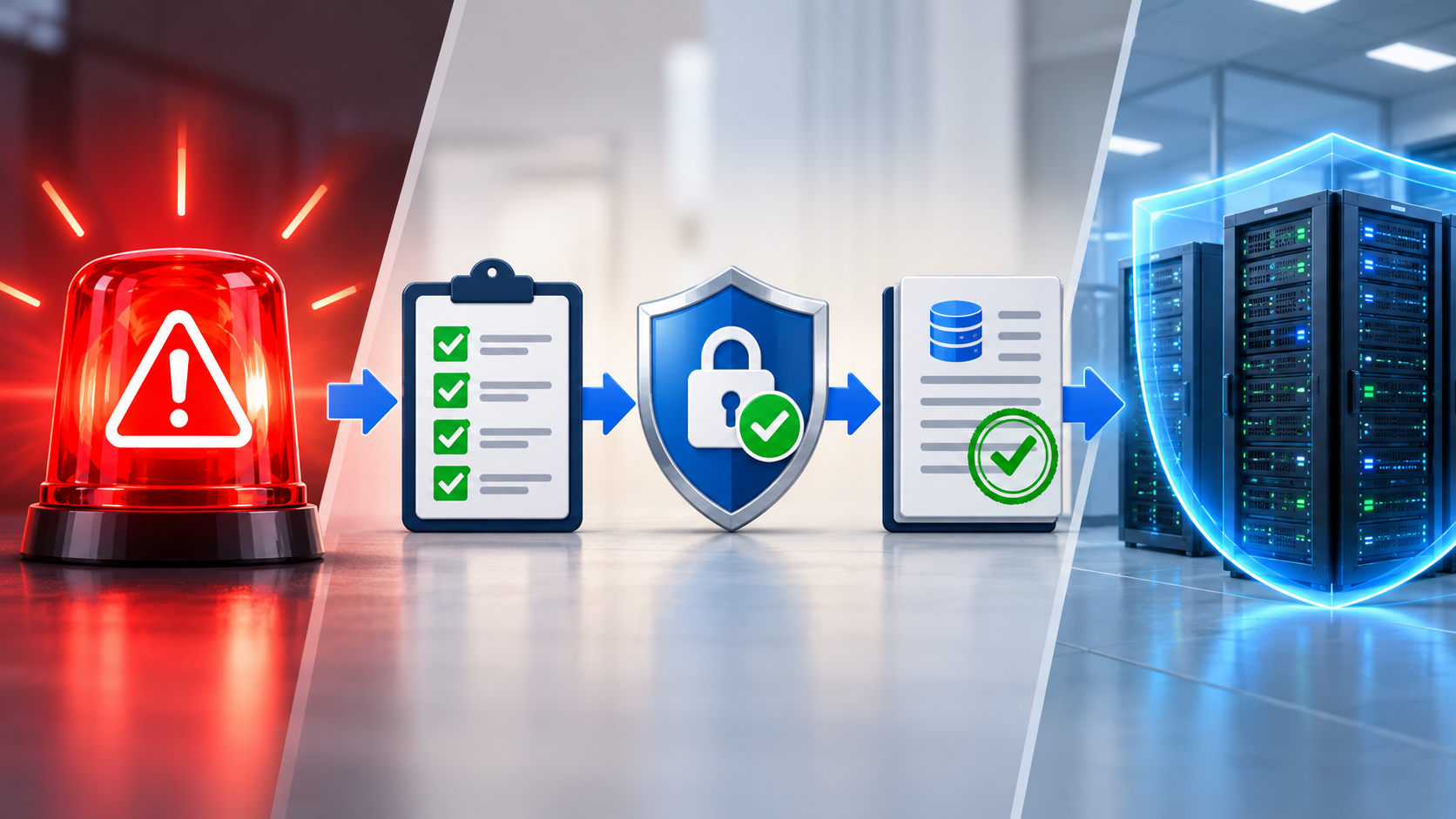
When Manual Incident Response Becomes an Operational Risk
In a financial institution, cybersecurity incidents rarely affect only one system.
A compromised user account may involve identity management, endpoint security, network infrastructure and application access controls.
Responding effectively requires coordination across multiple technologies and operational teams.
When these processes are largely manual, several risks emerge.
Delayed Threat Containment
Security analysts may identify suspicious activities quickly, but containment can take longer when actions require manual execution across multiple systems.
During this period, an attacker may have additional opportunities to access resources or move within the environment.
Inconsistent Response Procedures
Different analysts may follow slightly different procedures when investigating similar incidents.
Without standardised workflows, organisations may struggle to maintain consistent security controls across their infrastructure.
Limited Auditability
Incident investigations often involve multiple tools, communications and manual actions.
When these activities are not consistently documented, reconstructing the incident timeline and demonstrating adherence to approved procedures becomes more difficult.
Growing Pressure on Security Teams
As enterprise infrastructure expands across on-premises, cloud and hybrid environments, security teams must manage an increasing number of technologies and potential attack surfaces.
Simply adding more personnel may not address the underlying inefficiencies.
For financial institutions operating under Bank Negara Malaysia's Risk Management in Technology (RMiT) policy, these challenges also reinforce the importance of effective technology risk management, cybersecurity controls and operational resilience.
Security response must be more than fast. It must also be controlled, repeatable and accountable.
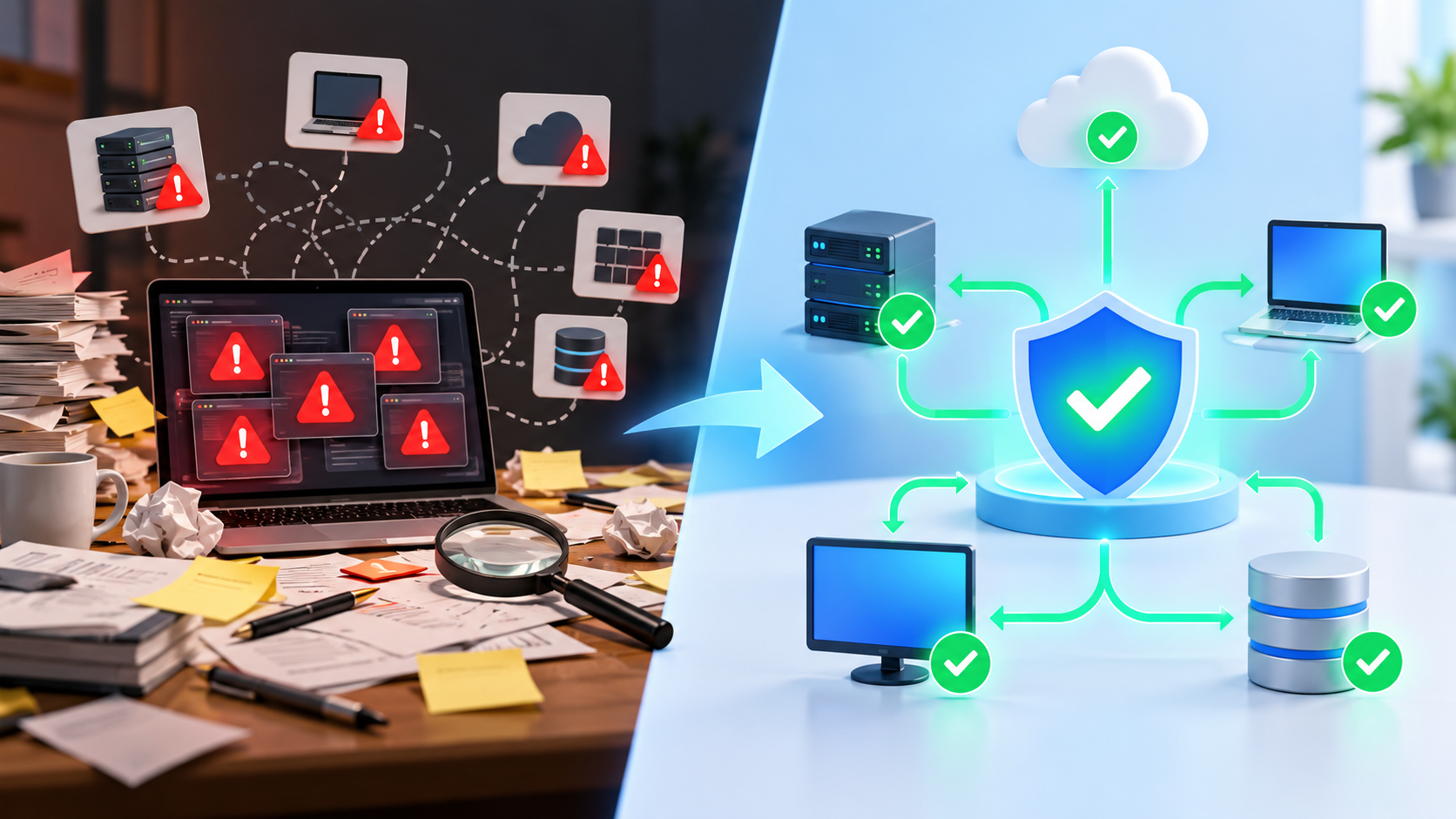
From Manual Investigation to Coordinated Security Automation
Security automation helps organisations reduce repetitive activities and standardise incident response procedures.
Rather than requiring analysts to perform every action manually, predefined workflows can coordinate activities across different security technologies.
For example, when a suspicious endpoint activity is detected, an automated workflow may:
Receive the alert from a security monitoring platform.
Collect relevant endpoint and system information.
Enrich the alert with additional context for investigation.
Apply predefined conditions to determine the next action.
Request analyst approval for sensitive containment activities.
Execute approved remediation procedures across relevant systems.
Record execution results to support incident review and audit requirements.
This approach does not eliminate the need for security professionals.
Instead, it allows them to focus on investigating complex threats, making risk-based decisions and handling incidents that require human judgement.
Routine and repeatable activities can be executed through standardised workflows, while higher-risk decisions remain subject to appropriate approval.
The result is a more structured incident response process that reduces unnecessary manual coordination.

How Red Hat Ansible Automation Platform Supports Security Operations
Red Hat Ansible Automation Platform provides an enterprise automation foundation that can help organisations coordinate security operations across different technologies and environments.
Rather than replacing existing cybersecurity tools, Ansible can complement them by automating and orchestrating operational actions.
Security Incident Response Orchestration
Ansible Playbooks can define repeatable workflows for security-related tasks, including collecting diagnostic information, updating configurations and executing approved remediation actions.
This helps organisations apply consistent procedures when responding to recurring incident scenarios.
Integration with Existing Security Technologies
Ansible can integrate with supported security platforms, network devices, operating systems and enterprise infrastructure through automation content, APIs and other supported interfaces.
For organisations already using SIEM, SOAR or endpoint security solutions, Ansible can serve as an execution and orchestration layer for infrastructure-level actions.
A SOAR platform, for example, may manage incident workflows and investigation decisions, while Ansible executes approved actions across connected IT systems.
Standardised Remediation Procedures
Security teams can use reusable automation workflows to perform recurring operational activities, such as:
Applying approved security configuration changes.
Updating firewall or network security policies.
Collecting logs and diagnostic information.
Supporting endpoint containment through compatible security integrations.
Executing predefined recovery and remediation tasks.
Validating system configurations after remediation.
The availability of each action depends on the organisation's systems, integrations and access permissions.
Governance and Human Oversight
Not every cybersecurity response should be fully automated.
For sensitive production environments, particularly within financial institutions, certain actions may require additional validation or authorisation.
Ansible Automation Platform supports controlled automation through features such as role-based access control, workflow approvals and execution records.
This enables organisations to standardise routine activities while retaining human oversight where required.
The objective is not to automate every security decision. It is to make approved security responses faster, more consistent and easier to govern.
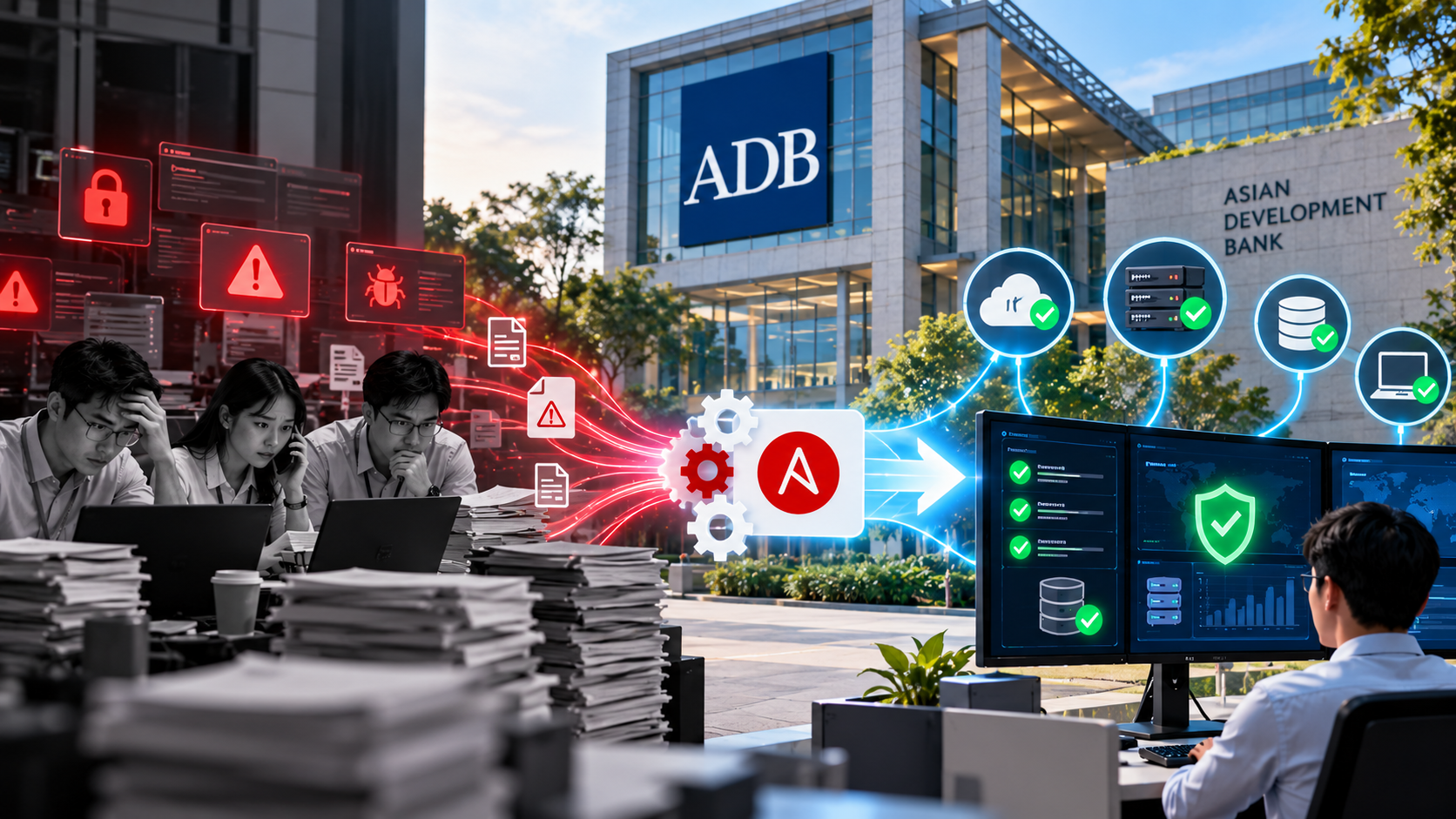
Real-World Example: How Asian Development Bank Strengthened IT Security and Incident Recovery Through Automation
For financial institutions, responding to IT incidents and security vulnerabilities requires more than identifying the problem. The ability to execute remediation and recovery procedures quickly and consistently is equally important.
Asian Development Bank (ADB), headquartered in the Philippines, faced growing operational demands as it worked to modernise its infrastructure and maintain reliable services.
Previously, many infrastructure management activities depended on manual processes and coordination across multiple IT teams. These included system provisioning, database management, patching and recovery procedures.
Such dependencies created additional operational complexity and increased the potential for human error.
The Solution: Red Hat Ansible Automation Platform
To address these challenges, ADB adopted Red Hat Ansible Automation Platform to standardise and automate routine infrastructure management activities.
Using Ansible Playbooks and certified automation content, ADB introduced repeatable workflows for provisioning, patching, remediation and recovery across its IT environment.
This helped the organisation reduce manual intervention while improving infrastructure consistency, security and operational resilience.
The Results: Faster Recovery, Less Manual Work
ADB achieved measurable improvements through automation:
20 Work Days Saved Every Month: Automated patching reduced repetitive manual maintenance activities.
2 Hours Saved Per Recovery Incident: Automated data recovery helped accelerate operational restoration.
100 Work Days Saved Annually: Database cloning was reduced from a process requiring three teams over 6–8 hours to an automated process taking approximately three hours.
Improved Security and Reliability: Automated monitoring, patching and remediation helped address vulnerabilities and reduce risks associated with human error.
What This Means for Financial Institutions
ADB's experience demonstrates how standardised automation can help financial organisations reduce the operational burden of maintaining secure and resilient IT infrastructure.
While ADB's documented results focus on infrastructure security, patching and recovery rather than automated SIEM alert triage, the underlying principle remains highly relevant to cybersecurity operations.
When threats or vulnerabilities are identified, manual remediation processes can become a bottleneck.
By automating approved operational procedures, financial institutions can improve response consistency, reduce repetitive tasks and allow IT teams to focus on higher-priority security activities.
The key takeaway: Detecting vulnerabilities is important. Having a reliable and repeatable process to address them is what turns security visibility into operational resilience.
Source: Red Hat — Asian Development Bank Saves Hundreds of Hours in Infrastructure Management with Red Hat Automation.
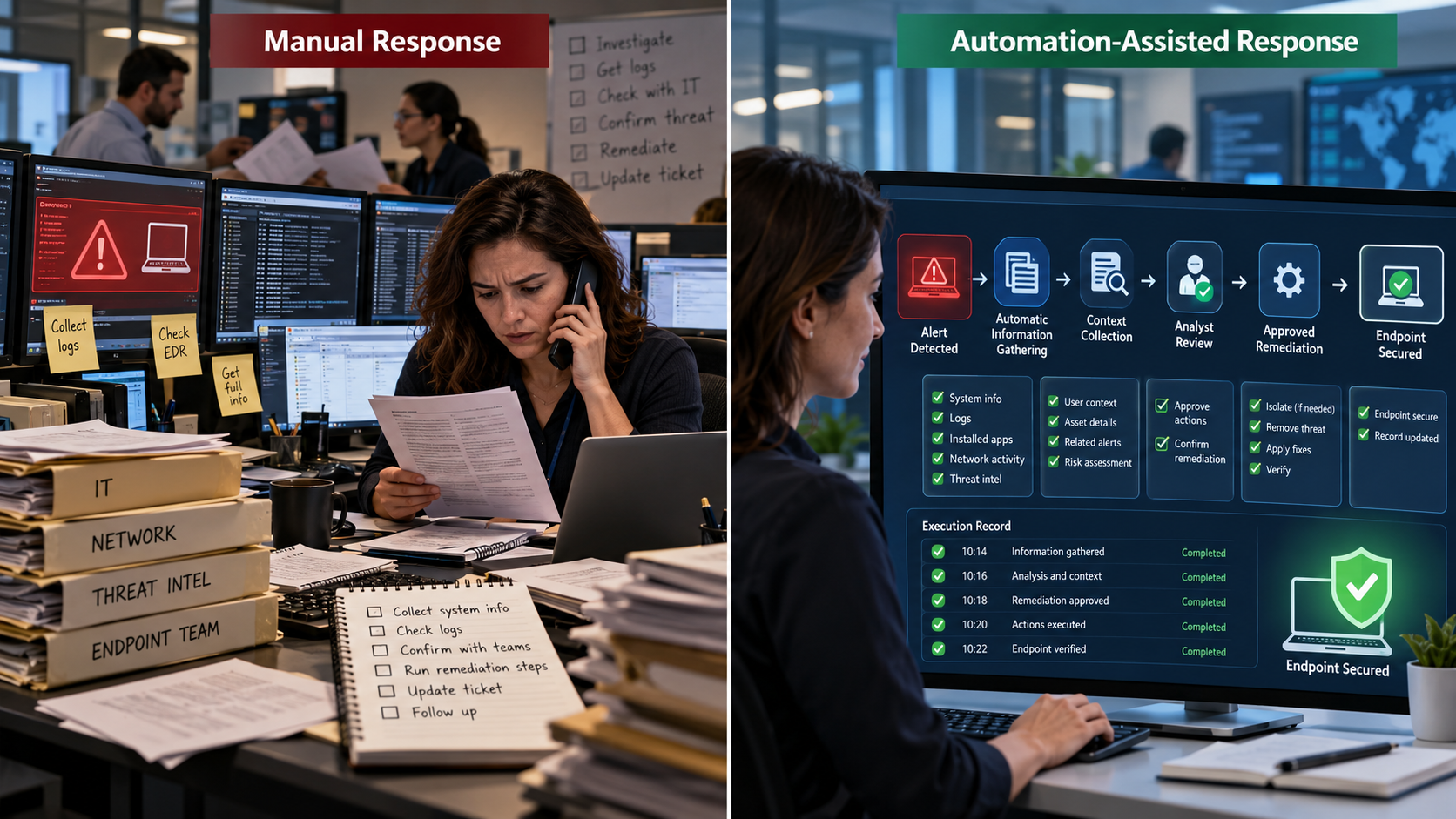
A Practical Example: Responding to a Suspected Compromised Endpoint
Consider a financial institution receiving an alert about potentially malicious activity on an employee's workstation.
Traditional Manual Response
The security team receives the alert and begins investigating.
An analyst gathers endpoint information, reviews security logs and contacts the infrastructure team to confirm the affected device.
If containment is required, the relevant team must execute the approved actions, document the changes and coordinate further investigation.
The response may involve several tools, teams and manual handovers.
Automation-Assisted Response
With an integrated security automation workflow, the process can become more coordinated.
Once an alert is received, an automated workflow can collect relevant system information, retrieve additional context and prepare the incident for analyst review.
After the appropriate validation and approval, Ansible can execute supported containment or remediation actions through the organisation's existing security tools.
Execution results can then be captured for further investigation and reporting.
Traditional response | Automation-assisted response |
Manual collection of system information | Automated information gathering |
Multiple operational handovers | Coordinated workflows |
Repetitive remediation tasks | Standardised execution procedures |
Manual tracking of actions | Centralised automation execution records |
Response depends heavily on individual procedures | Repeatable, approved workflows |
Illustrative scenario only. Actual capabilities and outcomes depend on the organisation's security architecture and integrations.
The value of automation is not limited to completing tasks faster.
It also helps organisations reduce process variation, improve coordination and maintain greater visibility over the actions performed during incident response.
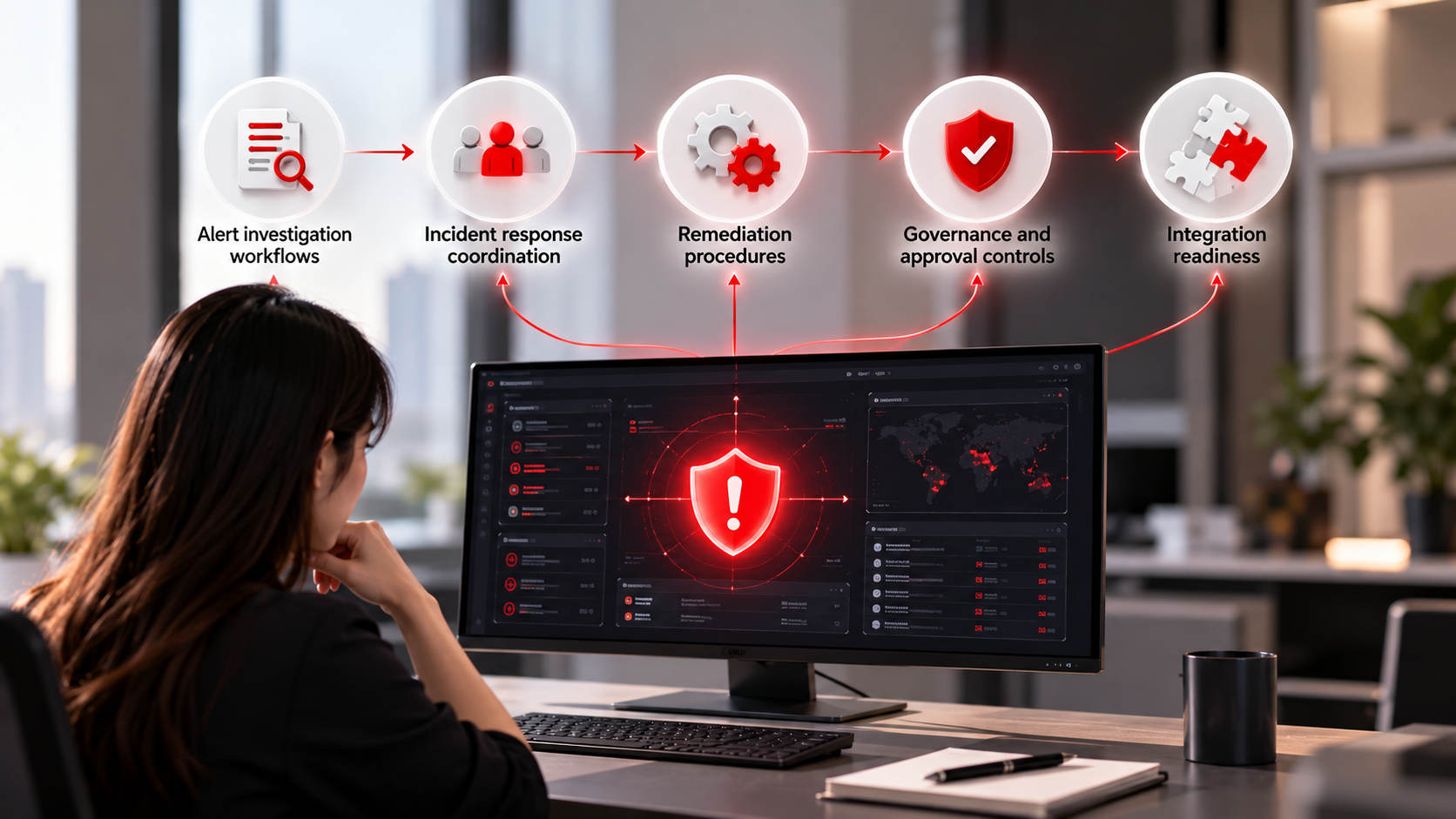
Building a More Resilient Security Operations Model
For financial institutions, introducing security automation should begin with a clear understanding of existing operational processes.
Not every incident requires automation, and not every response action should be executed without human approval.
A practical approach involves identifying high-volume, repetitive activities that consume security analysts' time while offering opportunities for standardisation.
Organisations can begin by evaluating:
Alert investigation workflows
Which recurring alerts require analysts to gather the same information from multiple systems?
Incident response coordination
Where do manual handovers between security, infrastructure and network teams introduce delays?
Remediation procedures
Which recurring actions can be documented, tested and executed through approved automation workflows?
Governance and approval controls
Which activities can be automated safely, and which require additional authorisation?
Integration readiness
Can existing SIEM, SOAR, EDR and infrastructure platforms support the necessary integrations?
By addressing these questions, organisations can introduce automation progressively without compromising existing security controls.
This creates a foundation for more consistent incident handling and continuous operational improvement.

Security Visibility Is Only the Beginning
Cybersecurity technologies have made it possible to detect and monitor threats across increasingly complex IT environments.
However, detecting an incident is only the beginning of an effective security response.
When investigation, coordination and remediation remain heavily dependent on manual processes, organisations may struggle to respond consistently as alert volumes and infrastructure complexity increase.
Red Hat Ansible Automation Platform helps bridge the operational gap by enabling repeatable automation workflows and supporting integration with existing security technologies.
For banks and financial institutions, this creates an opportunity to strengthen security operations while maintaining the governance and oversight required in regulated environments.
Because effective cybersecurity is not just about detecting threats earlier. It is about responding with greater speed, consistency and control.
Turn Security Alerts Into Coordinated Action with Wiki Labs
Are repetitive investigations and manual incident response procedures slowing down your security operations?
Wiki Labs helps enterprises explore how Red Hat Ansible Automation Platform can support security automation, incident response orchestration and operational standardisation across hybrid IT environments.
Let's discuss how your organisation can reduce manual response activities while maintaining control over critical security operations.
