How Enterprise Automation Improves IT Standardisation and Control
When Every IT Team Works Differently, Automation Becomes a Control
As organisations grow, IT environments rarely stay simple.
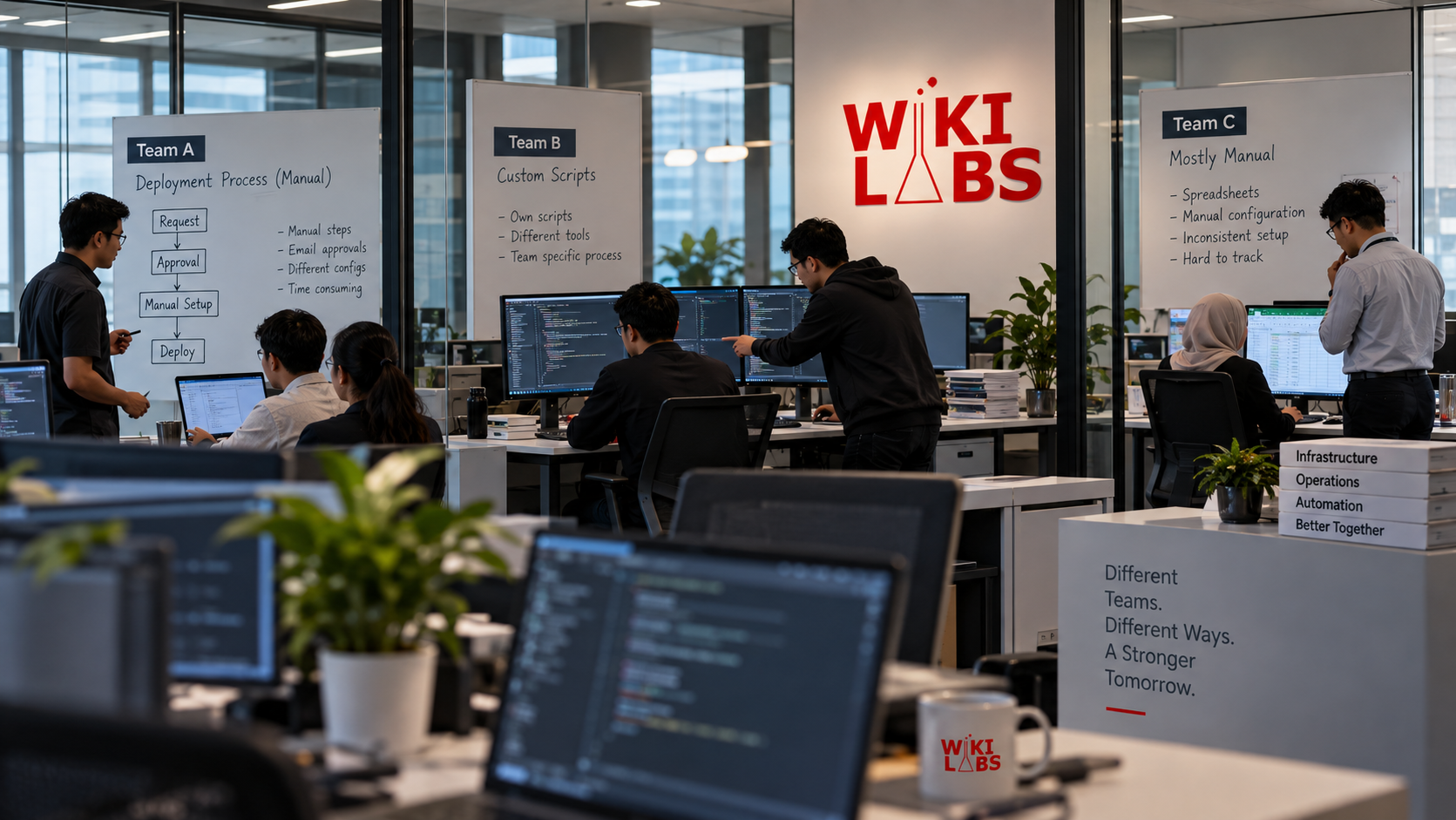
Different teams may manage similar systems using different procedures. One team follows one deployment process, another uses its own scripts, while another still relies heavily on manual steps.
Across multiple departments, environments or countries, these differences can gradually become an operational risk.
The problem is not necessarily that any one process is wrong.
The problem is that there may no longer be one consistent process.
The Hidden Cost of Inconsistent IT Operations
Consider a financial institution operating across multiple business units or technology environments.
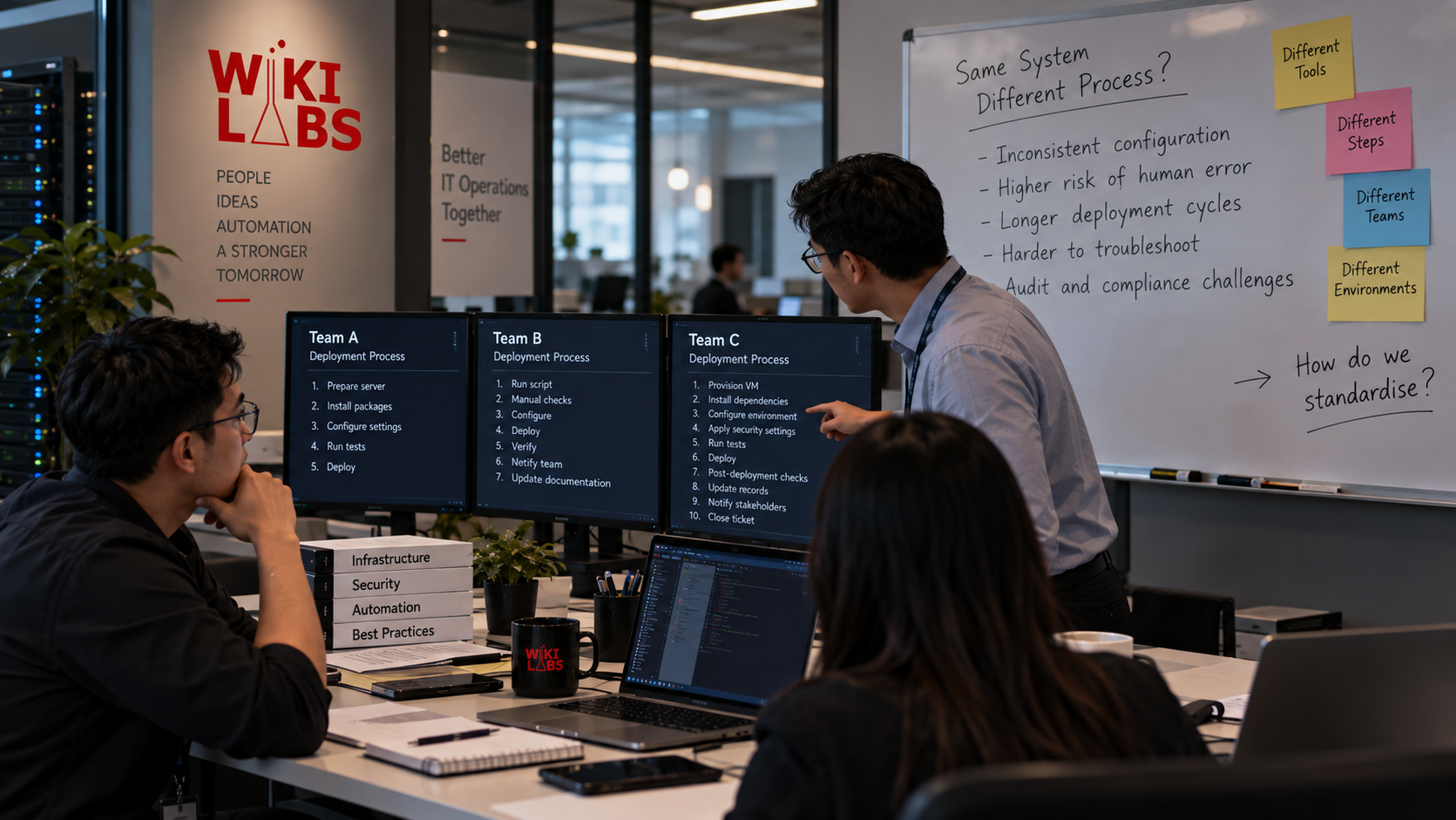
A server configuration may be implemented slightly differently by different teams.
An application deployment may involve 15 steps in one environment but 20 steps in another.
Security configurations may depend on individual engineers following documented procedures manually.
Over time, this can result in:
Configuration inconsistencies
Higher risk of human error
Longer deployment cycles
Difficulty reproducing successful changes
Greater dependency on individual engineers
More complicated troubleshooting
Increased effort during audits and compliance reviews
Even when documentation exists, documentation alone does not guarantee that every task is executed in exactly the same way.
This is where enterprise automation becomes more than a productivity tool.
It can become a standardisation and control mechanism.
Turning Standards Into Repeatable Automation
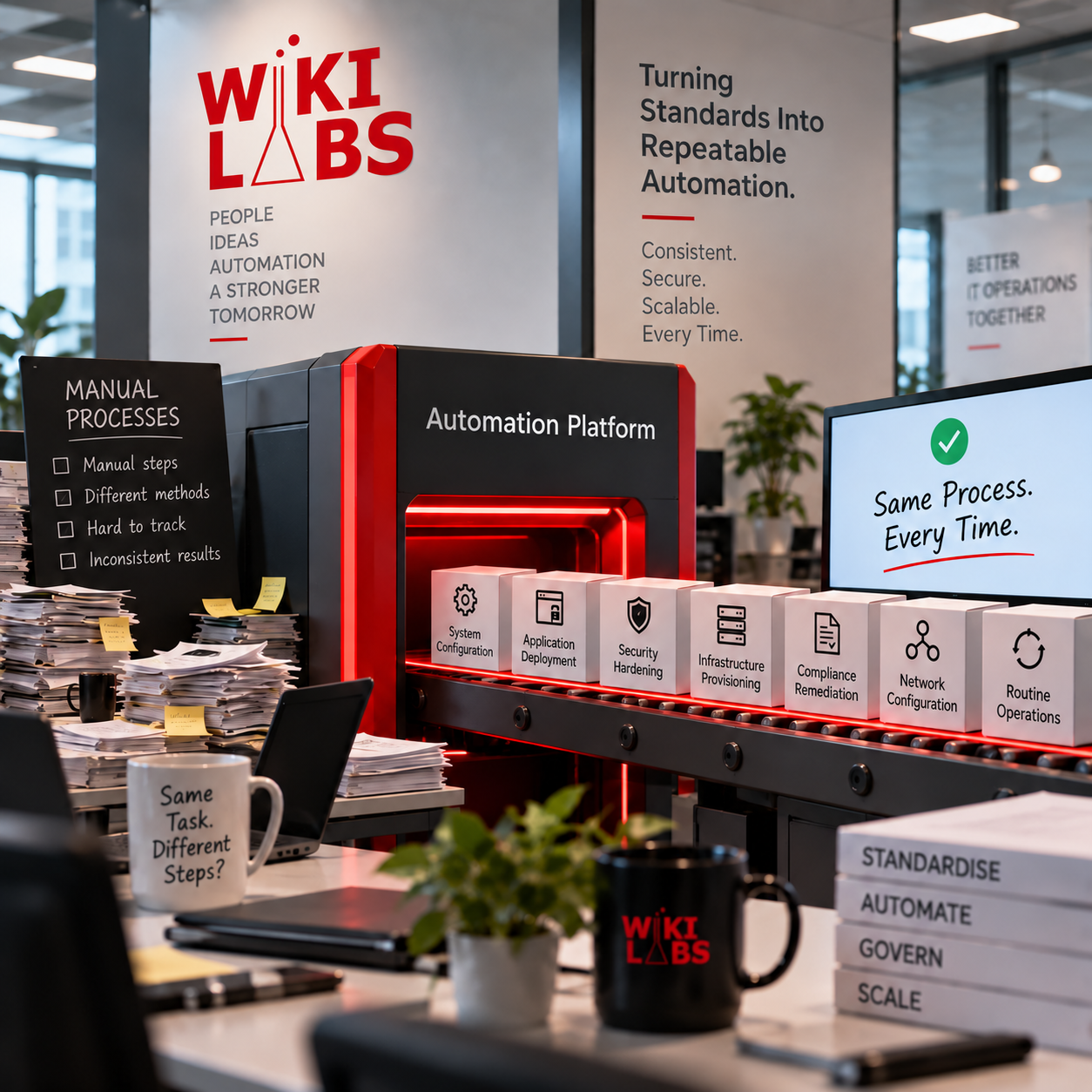
Red Hat Ansible Automation Platform allows organisations to define operational procedures as reusable automation workflows and playbooks.
Instead of relying on engineers to remember every step manually, organisations can automate common activities such as:
System configuration
Security hardening
Application deployment
Infrastructure provisioning
Network configuration
Compliance remediation
Routine operational tasks
The same approved automation can then be executed repeatedly across different systems and teams.
This helps organisations move from:
“This is how the process should be done.”
to:
“This is how the process is executed every time.”
That distinction becomes increasingly important as infrastructure grows.
Automation does not remove governance.
Done properly, it helps embed governance into day-to-day IT operations.
Why This Matters for Malaysian Financial Institutions

For Malaysian financial institutions, consistency is also closely connected to technology risk management.
Bank Negara Malaysia issued its revised Risk Management in Technology (RMiT) policy document in November 2025 to further strengthen how financial institutions manage technology and cyber risks, improve service resilience and maintain trust in the financial system.
Financial institutions are therefore not only expected to operate technology efficiently.
They need strong governance, controlled technology environments and the ability to manage operational and cyber risks consistently.
BNM has also demonstrated that technology resilience requirements are enforceable. Previous enforcement actions have included penalties involving failures to comply with RMiT requirements relating to critical-system availability.
Automation alone does not make an organisation RMiT-compliant.
However, standardised and controlled automation can support a stronger operating model by helping IT teams reduce manual variation, improve repeatability and execute approved processes more consistently.
Real-World Example: Ascend Money, Thailand 🇹🇭

Ascend Money provides a useful Southeast Asian example.
Headquartered in Bangkok, the financial technology company operates across several Southeast Asian markets, including Thailand, Vietnam, the Philippines, Cambodia, Myanmar and Indonesia.
Operating across multiple countries created an obvious challenge:
Different teams had different development and deployment processes.
At the same time, Ascend Money needed to release products quickly while still supporting the specific requirements of individual markets.
To create a more standardised technology environment, Ascend Money adopted several Red Hat technologies, including:
Red Hat Ansible Automation Platform
Red Hat OpenShift Container Platform
Red Hat Satellite
Red Hat Consulting
Ansible Automation Platform formed part of the automation approach used to deploy applications more consistently across countries, while the broader Red Hat environment helped establish a centralised application platform.
The Result
According to Red Hat, tasks that previously required approximately one week could be completed in just 2–3 days after the transformation.
Ascend Money was also able to support nearly 200 developers with a technology operations team of only six people.
The lesson is not simply that automation makes IT faster.
It demonstrates what becomes possible when organisations replace fragmented operational processes with a more standardised, repeatable and scalable approach.
Standardisation Becomes More Important as You Scale
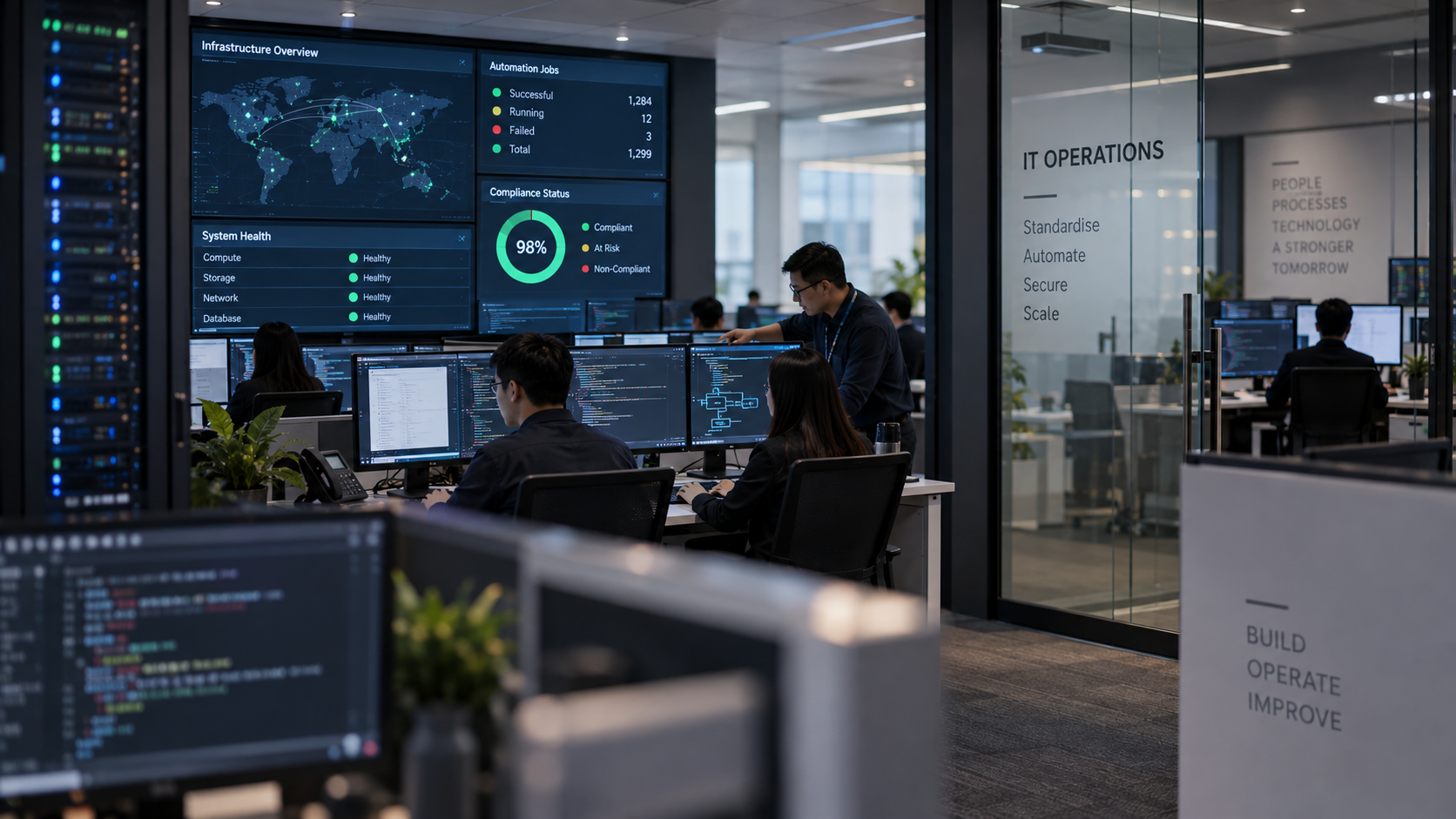
When an organisation has ten servers and a small IT team, individual differences may still be manageable.
When it has hundreds or thousands of systems, multiple technology teams and increasingly complex infrastructure, those same differences multiply.
The question becomes:
How do you make sure the organisation's approved IT standards are actually executed consistently across the environment?
More documentation is not always the answer.
More manpower is not always the answer either.
For many enterprises, the next step is turning approved processes into automation that can be executed consistently, repeatedly and at scale.
With platforms such as Red Hat Ansible Automation Platform, IT teams can begin standardising repetitive operational processes while maintaining the governance and control required in enterprise environments.
For financial institutions in particular, that means automation should not simply be viewed as a tool for doing things faster.
It can also be part of building a more controlled, consistent and resilient IT operating environment.
Why Wiki Labs?
Automation is not just about introducing a new tool. It needs to fit into your existing infrastructure, operational processes, security requirements and governance framework.
At Wiki Labs, we help enterprises approach infrastructure automation as part of a broader, standardised IT operating environment.
Our approach focuses on areas such as provisioning, patch management, configuration and compliance management, software lifecycle management, and operational visibility—helping organisations build more consistent and manageable IT environments.
Wiki Labs also brings experience in developing ITIL-based solutions aligned with internal and external audit requirements, supported by certified and trained technical personnel and solutions tailored to enterprise compliance needs.
Combined with Red Hat Ansible Automation Platform, we can help organisations identify repetitive operational processes, standardise how they are executed, and gradually introduce automation where it can deliver the most practical value.
The goal is not automation for the sake of automation.
It is to build an IT environment that is more consistent, scalable, controlled and ready for what comes next.
Ready to Explore What You Can Automate?
Still spending too much time on manual provisioning, patching, configuration or routine infrastructure operations?
Let’s talk IT over lunch and explore where Red Hat Ansible Automation Platform and Wiki Labs can help simplify your IT operations.
