Standard Operating Environment Across Hybrid Cloud: How to Avoid Platform Lock In in Malaysia
A hybrid cloud Standard Operating Environment (SOE) gives teams one repeatable way to build, deploy, operate, and maintain workloads across on premises systems and public clouds. A strong hybrid cloud SOE Malaysia strategy reduces dependency by keeping the operating layer portable, isolating provider specific services, and testing whether workloads and data move without a complete rebuild.
The objective is controlled choice. Your organisation places each workload according to performance, application needs, service availability, and cost. Teams follow common processes when the underlying infrastructure changes.
What a Hybrid Cloud Standard Operating Environment Means
A Standard Operating Environment started as a defined operating system image with approved software and configuration settings. A hybrid cloud SOE Malaysia model expands the standard to include the container runtime, application platform, provisioning process, deployment workflow, telemetry, patching, and support procedures.
The Standard Operating Environment Malaysia framework gives teams a documented baseline and repeatable build process. Infrastructure components differ by location, yet developers and operators use familiar interfaces.
Standardising heavily around one provider can concentrate templates, services, data interfaces, and team knowledge inside one commercial platform. An SOE should standardise how teams work while preserving infrastructure choice.
Why Hybrid Cloud SOE Malaysia Matters Now

Malaysian enterprises now have more local infrastructure options. AWS opened its Malaysia region in August 2024. Microsoft launched the Malaysia West cloud region during 2025. Enterprises also operate private cloud and virtualised data centres.
More choice creates a platform management question. Separate tools and procedures for each location increase support effort and slow workload movement. A broader hybrid cloud strategy in Malaysia should therefore define where workloads run and how teams operate them. A hybrid cloud SOE Malaysia approach supplies the common operational layer across those choices.
Where Platform Lock In Develops
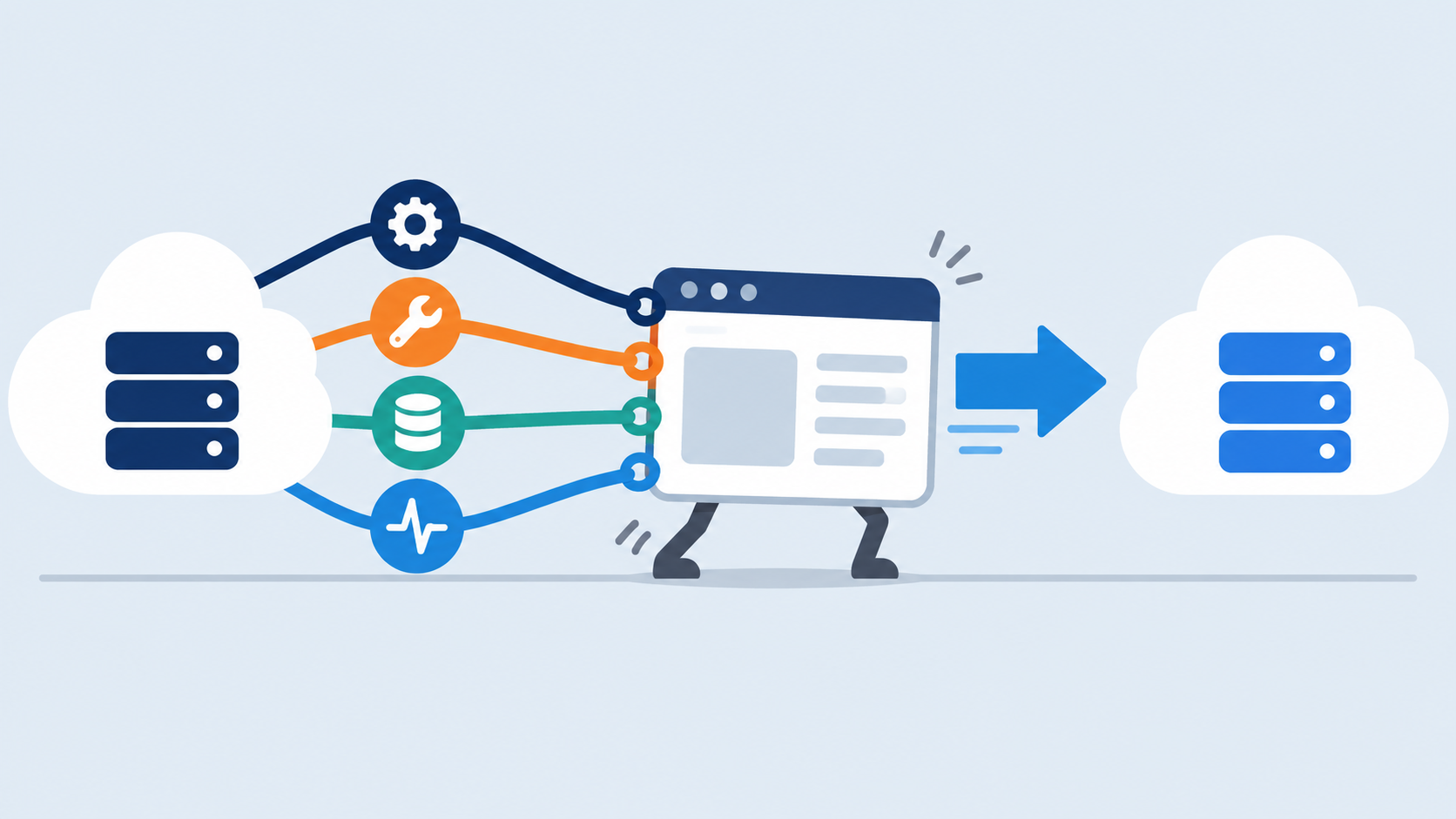
Platform dependency rarely comes from one product. Dependencies accumulate across technical decisions. Teams that want to avoid platform lock in should examine the complete application path.
Runtime Dependencies
An application becomes difficult to move when business logic depends on a proprietary runtime or provider API. Containers package applications consistently, while a conformant Kubernetes layer supplies common orchestration APIs. The Kubernetes conformance programme defines common behaviour across certified distributions.
Kubernetes alone does not guarantee hybrid cloud portability. Storage classes, load balancers, databases, and provider integrations still behave differently. Your platform team must document those differences and isolate them from core application code.
Provisioning Dependencies
Console based builds create hidden knowledge. Provider templates also make the target cloud part of deployment logic. A standard operating environment Malaysia design stores definitions in version control and keeps provider adapters separate from common configuration.
Data Dependencies
Closed formats, undocumented export steps, and proprietary database functions restrict movement. Define supported formats, export procedures, transfer time, and restoration steps before production. Data portability requires evidence from a completed restore.
Operating Dependencies
Separate consoles, deployment pipelines, and support procedures create operational lock in. A hybrid cloud SOE Malaysia programme should establish shared telemetry fields, service objectives, deployment approvals, scaling procedures, and recovery runbooks.
Adopt a Portable Core and a Provider Native Edge
An effective open hybrid cloud platform does not force every environment to look identical. The platform defines a portable core for consistent components, plus a controlled edge for provider services.
The portable core includes Linux images, OCI containers, Kubernetes APIs, infrastructure code, Git based delivery, telemetry, and operating procedures. These elements form the main hybrid cloud SOE Malaysia contract.
The provider native edge includes services chosen for clear value, such as a managed database or analytics engine. Connect each service through a documented interface. Record an alternative, data export path, migration work, and accepted loss of features.
This structure helps teams avoid platform lock in while limiting how far each dependency spreads through the application estate.
Build the Hybrid Cloud SOE Malaysia Model in Five Steps

1. Define the Supported Platform Baseline
List approved operating systems, packages, middleware, container runtimes, cluster versions, agents, and lifecycle dates. Version every baseline. Store build definitions with ownership and test results. Remove undocumented builds from the service catalogue.
2. Standardise the Application Runtime
Package suitable applications as OCI containers. Select a consistent Kubernetes-based platform for private infrastructure and public clouds. An open hybrid cloud platform such as Red Hat OpenShift provides a shared application and operational layer. Red Hat describes its open hybrid cloud strategy as a common environment across public, private, hybrid, and multiple cloud deployments.
Validate storage, networking, ingress, cluster extensions, and upgrade processes in every supported location. Record differences in platform modules rather than application code.
3. Automate Infrastructure Creation
Convert manual build steps into version controlled automation. Separate common modules from provider modules. The OpenTofu project provides an open source infrastructure as code option under Linux Foundation stewardship.
Automation should recreate an environment from documented inputs. Review code, test changes in nonproduction, and promote approved versions through one workflow. This process turns the standard operating environment Malaysia baseline into an executable definition.
4. Separate Applications and Data From the Control Plane
Keep business rules outside cloud templates. Use application interfaces for storage, messaging, data, and external services. Place provider settings in adapters. Define how the replacement environment receives data and how teams confirm integrity.
This separation supports hybrid cloud portability because teams replace an integration layer instead of rewriting the application. The design also identifies which managed services need a portable alternative.
5. Standardise Daily Operations
Use common deployment stages, log fields, metrics, service objectives, patching cycles, escalation paths, and support runbooks. Operators should recognise the workflow across private infrastructure and public cloud.
A hybrid cloud SOE Malaysia operating model succeeds when teams manage services through common procedures. Infrastructure similarity alone provides limited value if deployment and support remain fragmented.
Prove Hybrid Cloud Portability With an Exit Test
Vendor claims do not prove portability. Use a controlled exit test to measure real workload movement.
Recreate the environment. Deploy a representative application to a second platform using source controlled automation.
Move the application and data. Transfer a sample dataset, restore it, and replace provider specific adapters without rewriting core business logic.
Test daily operations. Run the same deployment, monitoring, scaling, maintenance, and support procedures.
Measure and repeat. Record time, cost, engineering effort, required changes, and lost features. Repeat the test after major architecture changes.
These steps turn hybrid cloud portability into a measurable capability. A hybrid cloud SOE Malaysia model needs a tested alternative deployment path.
Evaluate an Open Hybrid Cloud Platform With Direct Questions
Ask platform vendors and internal architecture teams for evidence:
Do the same application artifacts run on another supported infrastructure?
Does source controlled automation recreate the platform without a proprietary portal?
Do provider integrations stay outside core application logic?
Does a documented process export and restore data within an accepted period?
Has the organisation completed the alternative deployment test?
Open source components support choice, though source availability does not prove complete platform portability. An open hybrid cloud platform should demonstrate portability across runtime, automation, data, delivery, and daily operations. These questions help teams avoid platform lock in during architecture reviews and procurement decisions.
Start With One Workload and One Measurable Standard
Begin the hybrid cloud SOE Malaysia programme with one representative service. Define its baseline, automate the environment, isolate provider dependencies, and deploy the service in two locations. Refine the standard before expanding.
Wiki Labs brings together SOE, automation, Red Hat OpenShift, virtualisation and managed operations through WikiBlox. The approach gives Malaysian enterprises a common foundation for virtual machines and containers while preserving infrastructure choice. A focused hybrid cloud SOE Malaysia strategy gives your teams consistent operations and a tested path to future platform decisions.
WikiBlox: What You Should Know

WikiBlox is the platform Wiki Labs runs a rebuilt SOE on, not a separate product added after migration. It combines Red Hat OpenShift with Lenovo hardware and AMD EPYC processors, hosted and supported inside Malaysia. Every WikiBlox deployment ships with a golden image pipeline built in, so a rebuilt SOE inherits standardized hardening and version control from the first day instead of waiting on a second project to add it.
Because WikiBlox runs on OpenShift Virtualization, the golden image work covered in this playbook maps directly onto the platform your team is already committed to. Teams rebuilding their SOE this way skip the gap between choosing a platform and proving it meets RMiT and PDPA controls, since both get validated together instead of as two separate workstreams.
How Wiki Labs Helps Manage Virtualisation Costs
Wiki Labs Sdn Bhd provides full-lifecycle services for enterprise virtualisation, from assessing existing VMware environments to designing migration frameworks and optimising operations post-deployment.
Through cost-transparency analysis, predictable licensing models, and Malaysia-based support, Wiki Labs helps organisations identify and reduce hidden expenses associated with legacy systems. Its consultants offer clear insights into the total cost of ownership across leading VMware alternatives, ensuring each client selects the most cost-effective and scalable approach for long-term growth.
With deep local expertise and platform-agnostic hardware integration, Wiki Labs enables Malaysian enterprises to achieve operational clarity and sustainable cost efficiency in their modernisation journey.
Ready to Move Forward with Modern VMware Alternatives?
WikiBlox isn’t just another platform. It’s your all-in-one foundation for Malaysia’s enterprise IT future.
👉 Schedule a free consultation with Wiki Labs experts today to see how WikiBlox can power your transformation.
Disclaimer:
The information in this article is provided for general informational purposes only. All product names, trademarks, and registered trademarks are the property of their respective owners. References to third-party technologies such as VMware, Red Hat, Lenovo, AMD, and others are made solely to describe compatibility or comparison context and do not imply any endorsement or affiliation.
Wiki Labs Sdn Bhd makes reasonable efforts to ensure the accuracy of information at the time of publication; however, readers are encouraged to verify technical details and licensing information directly with the respective vendors.
