Can Your IT Team Prove Every Critical Change Was Properly Controlled?
Can Your IT Team Prove Every Critical Change Was Properly Controlled?

Why audit-ready IT operations require more than successful deployments — and how Red Hat Ansible Automation Platform can strengthen change governance.
A Successful IT Change Is Not Always an Auditable Change
Imagine an auditor reviewing a critical server configuration change made three months ago.
The IT team confirms that the change was completed successfully. The system is operating normally, and no incidents were reported.
But when the auditor requests supporting evidence, several questions remain unanswered:
Who authorised the change?
Who executed it, and when?
Was the approved procedure followed?
Were the required security configurations applied?
Can the team retrieve the execution records and validation results?
For financial institutions, the challenge is not simply whether an IT change was successful. It is whether the organisation can demonstrate that the change was properly authorised, consistently executed and adequately documented.
When critical changes rely on manual procedures, scattered approval emails and inconsistent execution records, demonstrating accountability becomes increasingly difficult.
The real governance risk emerges when IT teams cannot reliably reconstruct what happened, even when the system itself is functioning as expected.

Why Manual Change Management Creates Audit Challenges
In complex enterprise environments, infrastructure changes occur continuously.
Security patches must be deployed, server configurations updated, access permissions adjusted and applications maintained across multiple environments.
Although many organisations have established change-management procedures, execution and evidence collection may still depend heavily on individual engineers.
This creates three common challenges.
Inconsistent Execution Across Teams
Two engineers may follow the same documented procedure but execute certain steps differently.
Over time, these differences can create configuration inconsistencies, especially when similar changes are repeated across hundreds of servers.
Fragmented Approval and Execution Records
Change approvals may be stored in ticketing systems, while execution details remain in terminal logs, spreadsheets or email conversations.
Connecting the approved request to the actual implementation can become a time-consuming exercise during an audit.
Limited Visibility Into Operational Changes
Without centralised execution records, management may struggle to determine whether changes followed approved procedures or whether exceptions occurred.
The difficulty increases when multiple teams, systems and environments are involved.
For regulated organisations, these challenges affect more than operational efficiency. They can weaken the evidence available to demonstrate effective technology governance.

From Compliance Requirements to Demonstrable IT Controls
Malaysia's financial institutions operate in an environment where technology risk management, cybersecurity and operational resilience remain important regulatory priorities.
Bank Negara Malaysia's revised Risk Management in Technology (RMiT) policy reinforces the importance of managing technology and cyber risks and maintaining resilient financial services.
For IT leaders, this creates a practical governance consideration:
How can the organisation demonstrate that its technology controls are consistently implemented, rather than simply documented in internal policies?
A written change-management procedure establishes expectations. However, an effective governance framework also needs evidence that those expectations were followed.
This includes connecting change authorisation, execution, validation and supporting records.
Rather than relying entirely on manual evidence gathering, organisations can use standardised automation to make operational activities more consistent and traceable.
How Red Hat Ansible Strengthens Change Governance and Audit Readiness
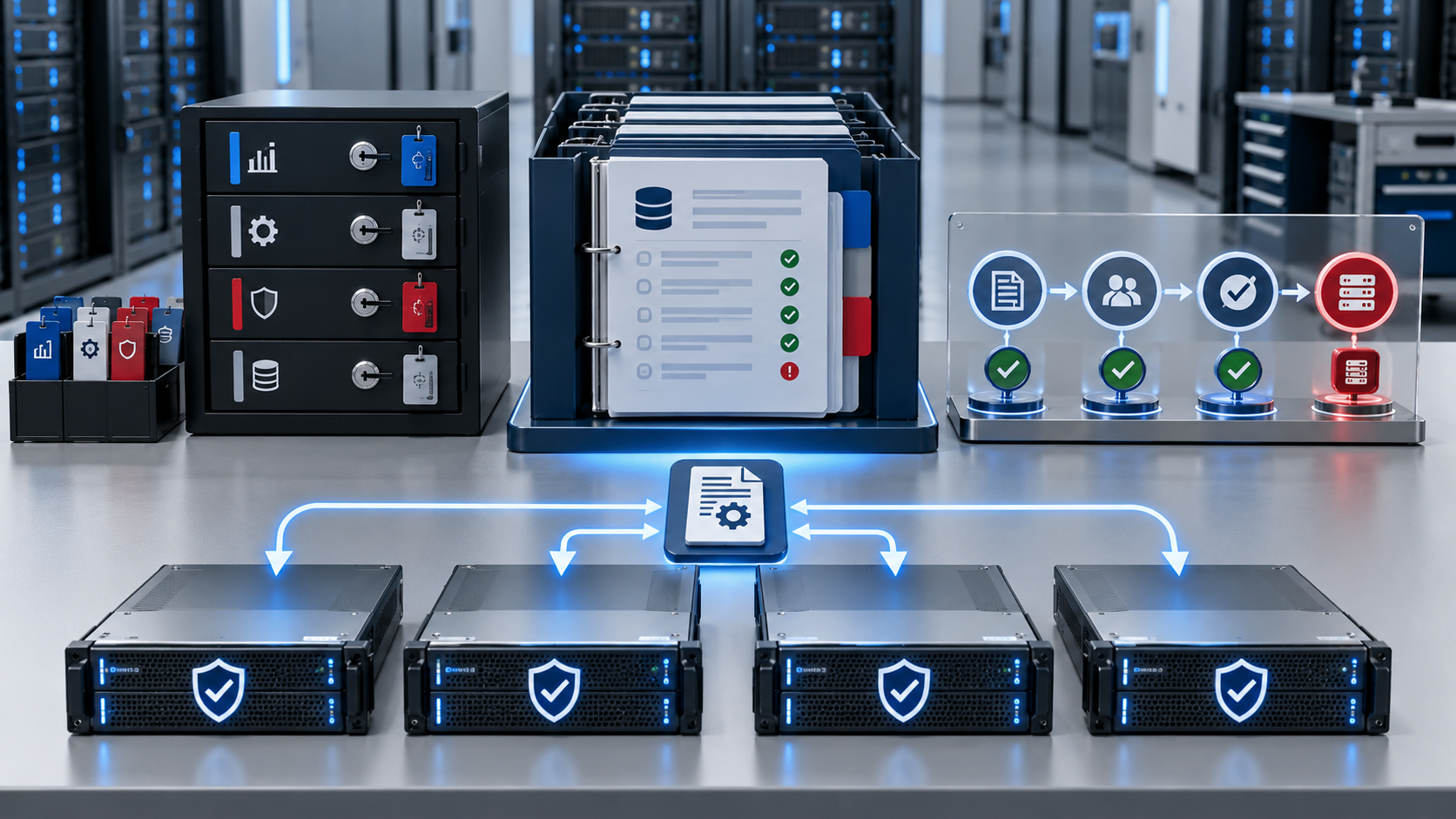
Red Hat Ansible Automation Platform enables enterprises to standardise and manage infrastructure operations through centrally controlled automation workflows.
Beyond reducing repetitive tasks, the platform offers capabilities that can support stronger operational accountability.
Centralised Automation Job Records
Ansible Automation Platform's automation controller records job execution information, including activity history and execution results.
This helps IT teams review what automation was executed, identify failures and retrieve relevant operational records.
Instead of depending solely on manually maintained logs, teams can use centralised job histories as part of their audit evidence.
Role-Based Access Control
Not every employee should have the same authority to modify production systems.
Ansible Automation Platform supports role-based access control (RBAC), allowing organisations to assign permissions according to responsibilities.
For example, an engineer may be authorised to execute a predefined automation job without receiving permission to modify the underlying automation template.
This supports separation of duties and reduces unnecessary administrative access.
Controlled Workflows and Approvals
Critical infrastructure changes often require coordination between operations, security and management teams.
Ansible Automation Platform supports workflow job templates and approval steps, enabling organisations to introduce checkpoints before selected automation activities proceed.
When properly configured, these workflows can help ensure that changes follow defined operational procedures.
Organisations can also integrate automation with existing IT service management systems to connect change requests and approvals with execution records.
Standardised Configuration and Policy Enforcement
Ansible Playbooks define repeatable procedures for activities such as server configuration, security hardening and patch deployment.
This allows teams to apply approved configurations consistently across multiple environments.
Automation can also perform validation checks and identify deviations from expected configurations.
Together, these capabilities help organisations move from individually executed tasks towards more standardised, visible and controlled IT operations.
Importantly, automation records support audit readiness, but they do not replace formal change authorisation, independent review or appropriate evidence-retention policies.

Real-World Example: AFFIN Bank Strengthens IT Operations Through Automation
A relevant example comes from AFFIN Bank Berhad, Malaysia, recognised in the Red Hat Innovation Awards APAC 2025.
Operating within Malaysia's regulated banking sector, AFFIN manages a complex IT infrastructure supporting its nationwide financial services.
The bank identified the need to improve operational efficiency, reduce manual errors and achieve greater consistency through automation.
By adopting Red Hat Ansible Automation Platform, AFFIN transformed several important IT processes, including:
Server patch management
Change tracking
Disaster recovery operations
According to Red Hat, processes that previously involved time-consuming manual activities became automated, helping reduce patching time and minimise configuration errors.
The implementation also improved system reliability, strengthened security and supported more consistent compliance practices.
What Can Other Financial Institutions Learn?
AFFIN's experience demonstrates how infrastructure automation can extend beyond operational efficiency.
Standardised patching and improved change tracking can provide a stronger foundation for controlled and traceable IT operations.
For financial institutions managing complex infrastructure environments, the lesson is clear:
Automation is not only about completing changes faster. It is also about making critical IT activities more consistent, visible and manageable.

Building an Audit-Ready Approach to IT Change Management
Improving change governance does not necessarily require replacing an organisation's existing IT management framework.
A more practical approach is to identify high-frequency, high-risk operational activities where manual execution and fragmented evidence create unnecessary exposure.
Organisations can begin with server patching, configuration changes and infrastructure provisioning.
By standardising these activities through Red Hat Ansible Automation Platform, IT teams can establish repeatable procedures, introduce appropriate access restrictions and maintain more consistent execution records.
Over time, integration with change-management systems, centralised logging and compliance reporting can further strengthen accountability.
The objective is not to automate every decision.
It is to ensure that critical changes are executed through appropriate controls, with sufficient evidence to support operational review and audit requirements.

Why Wiki Labs? Turning IT Automation Into Stronger Governance
Implementing automation technology is only one part of building a well-controlled IT environment. Organisations also need the right expertise, processes and implementation approach to ensure automation supports their operational and governance requirements.
As a Red Hat Premier Business Partner in Malaysia, Wiki Labs helps enterprises adopt and optimise Red Hat technologies, including Red Hat Ansible Automation Platform, to improve operational efficiency, standardisation and control.
Our approach goes beyond automating repetitive tasks. We focus on helping organisations establish more consistent and manageable IT operations.
How Wiki Labs Can Help:
IT Environment Assessment: Identify gaps in existing change-management processes, manual workflows and infrastructure configurations.
Ansible Automation Implementation: Design and implement standardised automation for patching, provisioning, configuration management and other critical IT operations.
Controlled Automation Workflows: Help establish role-based access, approval checkpoints and structured automation processes aligned with organisational requirements.
Audit Evidence and Operational Visibility: Support the implementation of centralised execution records, monitoring and reporting to improve change traceability.
Continuous Improvement: Help organisations refine automation processes as infrastructure environments, operational needs and compliance expectations evolve.
Through our Standard Operating Environment (SOE) framework, Wiki Labs also supports enterprises in establishing standardised IT environments across infrastructure management, security configuration, patching and compliance-related operations.
For financial institutions, our objective is to help bridge the gap between documented IT policies and consistent operational execution.
Because effective IT governance is not just about having the right controls on paper. It is about making those controls part of everyday IT operations.
Wiki Labs — Innovation Inspires Progress.
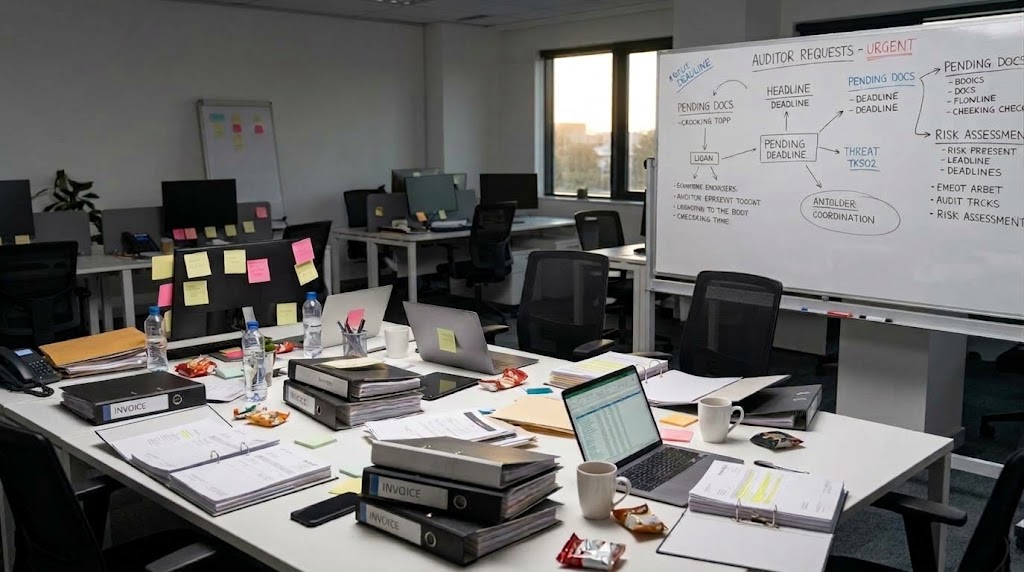
When the Next Audit Comes, Will Your Evidence Be Ready?
For enterprise IT teams, successful system operations are only part of the responsibility.
The ability to explain how a critical change was authorised, executed and validated is equally important.
As infrastructure environments become more complex, relying on manual records and individual knowledge can make this increasingly difficult.
Red Hat Ansible Automation Platform provides capabilities that can help organisations standardise execution, strengthen access controls and improve visibility into operational changes.
With the right governance processes and integrations, automation can help transform audit preparation from a reactive evidence-gathering exercise into a more structured, ongoing operational practice.
The question is no longer just whether your IT team can execute a critical change. It is whether your organisation can demonstrate that the change was properly controlled.
Let's Talk IT Over Lunch
Are your IT teams spending too much time managing manual changes, collecting audit evidence or maintaining consistent infrastructure configurations?
Discover how Wiki Labs can help your organisation explore Red Hat Ansible Automation Platform to strengthen IT operations, improve governance and build more audit-ready processes.
