WikiBlox Migration for Government and GLC Projects in Malaysia
Malaysia is placing increasing emphasis on digital delivery across public sector institutions. Initiatives led by the Ministry of Digital, including the National Cloud Computing Policy, are driving greater adoption of cloud and modern infrastructure within government agencies and government-linked companies (GLCs).
In this environment, migration is no longer just a technical exercise. Government and GLC environments require structured migration approaches that balance operational control, continuity, and governance while aligning with regulatory and compliance expectations.
Migration strategies in these environments typically go beyond workload movement. They involve platform standardisation, compliance alignment, and the integration of managed operations to ensure consistency, auditability, and long-term sustainability.
Within this context, solutions such as WikiBlox migration are positioned around enabling these outcomes, supporting organisations in transitioning infrastructure while maintaining governance, resilience, and operational visibility.
Why Government and GLC Migration Work Has Changed
Migration projects in government and GLC environments are no longer limited to moving workloads from one platform to another. Today, teams must address challenges such as legacy virtual machines, fragmented configurations, slow patching cycles, limited visibility, and increasing audit requirements.
These issues directly affect service quality, internal productivity, and overall risk exposure. As environments become more complex and regulated, migration planning requires a deeper level of coordination across infrastructure, operations, and compliance functions.
In many organisations, infrastructure environments tend to drift over time, leading to inconsistencies that create security, compliance, and performance gaps. Manual system builds, delayed troubleshooting, and lack of standardisation further increase operational costs and weaken service reliability.
In government and GLC settings, these conditions raise the stakes of migration initiatives. Infrastructure decisions are no longer isolated technical choices, but part of a broader effort to ensure operational stability, regulatory alignment, and long-term system sustainability.
What WikiBlox Migration Solves in Government and GLC Environments
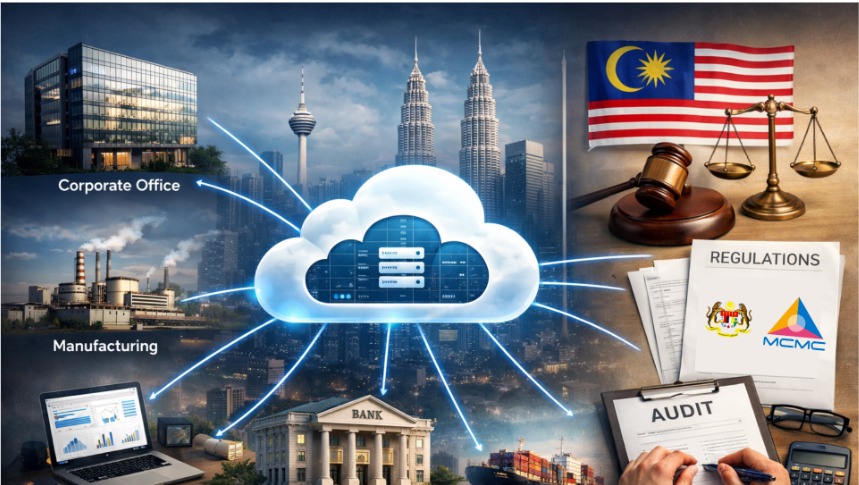
Government and GLC environments often struggle with fragmented platforms, weak configuration control, and limited operational visibility. Addressing these challenges requires more than a platform change, and instead calls for a structured approach to how workloads are standardised, controlled, and operated after migration.
One of the key issues in these environments is configuration drift and operational fragmentation. According to the National Institute of Standards and Technology, a baseline configuration is a formally reviewed set of specifications used to guide future builds and changes under controlled processes, which is critical in regulated environments. At the same time, Red Hat highlights the importance of unified virtualisation platforms in managing both legacy and modern workloads with reduced operational sprawl.
Within this context, WikiBlox migration is positioned around enabling these outcomes, supporting standardisation, improving operational visibility, and aligning infrastructure with governance and compliance requirements. This makes it particularly relevant for government and GLC teams that require greater control, consistency, and a more structured operating model following migration.
Why WikiBlox Migration Fits Government and GLC Priorities
Audit readiness
Audit readiness depends on standardised controls, clear reporting, and consistent system builds. In many environments, the absence of a structured operating model leads to slower audit processes and higher error rates. This highlights the importance of approaches that support measurable and controlled environments, particularly in government and GLC operations.
Security control
Security challenges often arise from manual processes, inconsistent hardening, and delayed patching cycles. These gaps increase exposure and compliance risk over time. Moving workloads into environments with stronger policy enforcement, standardisation, and continuous validation helps reduce these risks and improves overall security posture.
Operational speed
Large organisations require faster provisioning without compromising control. In one Malaysian telco case, automated provisioning reduced server onboarding time from three days to under four hours across more than 500 servers. This demonstrates how speed, consistency, and service continuity can be improved together through a more structured operational approach.
Within this context, solutions such as WikiBlox migration are aligned with these priorities, supporting audit readiness, strengthening security control, and enabling operational efficiency in complex government and GLC environments.
The Role of SOE in WikiBlox Migration
A Standard Operating Environment (SOE) provides a structured foundation for migration initiatives. Without standardisation, migration efforts often transfer existing inconsistencies into new platforms, leading to continued configuration drift and operational inefficiencies.
A structured SOE approach typically includes:
Assessment and inventory of existing infrastructure and workloads
Definition of baseline configurations for systems and environments
Automated provisioning to ensure consistent system builds
Continuous governance and monitoring of configurations and policies
Regular review and optimisation of the environment
When applied within a migration context, this approach ensures that systems are not built individually with inconsistent settings, patches, or security controls. Instead, teams operate from a defined baseline and apply changes through policy-driven processes.
This reduces configuration drift, improves operational consistency, and simplifies post-migration support. In government and GLC environments, these outcomes directly impact both day-to-day operations and audit readiness.
The Role of Compliance Automation in WikiBlox Migration
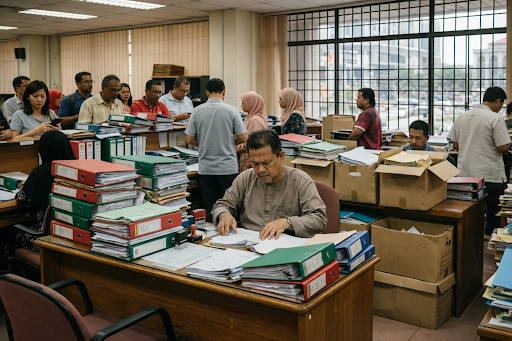
Manual compliance processes often create friction rather than control. They slow reporting, reduce consistency, delay response times, and place operational burden on teams through repetitive tasks. When migration is performed without addressing these underlying processes, existing inefficiencies are often carried into the new platform.
This is where compliance automation becomes critical. It shifts governance from a periodic, manual exercise to a continuous and policy-driven process. By embedding standardisation, monitoring, and compliance checks into daily operations, organisations can improve auditability, reduce risk, and maintain consistent system states across environments.
Within this context, WikiBlox migration is aligned with enabling these outcomes, ensuring that compliance, monitoring, and standardisation are integrated into the operating model rather than treated as separate activities. This makes migration not only technically complete but also operationally effective for government and GLC environments.
What Makes WikiBlox Migration Successful in High-Risk Environments
Successful migration in government and GLC environments requires a structured, end-to-end approach that prioritises control, consistency, and continuous governance.
Assessment: Identify configuration drift, patch delays, reporting bottlenecks, and hidden workload dependencies. This step creates a clear baseline and prevents rushed migration decisions.
Standardisation: Apply one baseline for security, configuration, and lifecycle management. WikiBlox Migration should move workloads into a controlled operating model, not into another version of unmanaged sprawl.
Deployment with governance: Deploy workloads on WikiBlox with compliance checks and continuous monitoring built in. Migration becomes stronger when control is enforced during deployment, not added later.
Review and improvement: Review the environment regularly to keep pace with policy, business, and regulatory changes. This makes WikiBlox Migration an ongoing operating model, not a one-time project.
Why WikiBlox Migration Has Strategic Value
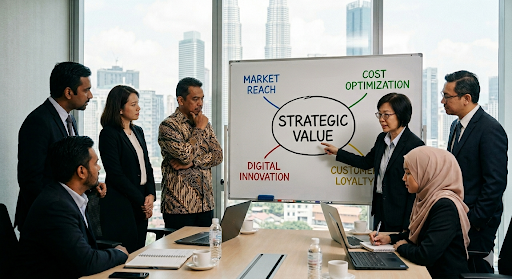
The value of a migration initiative should be assessed based on what changes after go-live. Does the environment become easier to control, support, and govern, or does the same complexity persist under a new platform?
This is where the strategic value of migration becomes clearer. It shifts the focus away from infrastructure replacement alone and towards whether the operating model itself improves as part of the transition.
Many government and GLC organisations do not struggle due to a lack of technology, but because control, compliance, and operations remain disconnected. When these elements are not aligned, complexity continues regardless of platform choice.
In this context, approaches such as WikiBlox migration, as delivered by Wiki Labs Sdn Bhd, are aligned with addressing these challenges, emphasising not only workload movement but also the creation of a more manageable, governed, and sustainable environment over the long term.
Ultimately, the key question is not whether workloads are successfully migrated, but whether the organisation is moving towards a more controlled and operationally effective state.
Final Position on WikiBlox Migration
The real expectation from the WikiBlox migration should be higher than a successful system move. Government and GLC organisations should expect migration to reduce drift, improve standardisation, strengthen governance, and ease operational pressure over time. If migration only changes the platform without improving control and consistency, then the main issue remains unresolved.
The value of WikiBlox migration should therefore be judged by what improves after the transition: audit readiness, operational discipline, service continuity, and long-term manageability. The issue is not migration alone, but whether the organisation is left in a stronger position to govern and sustain the environment after go-live.
In this context, solutions such as WikiBlox migration, as delivered by Wiki Labs Sdn Bhd, are aligned with these expectations, focusing on building a more controlled, consistent, and sustainable operating environment rather than simply completing a technical migration.
WikiBlox: Malaysia’s Modern Approach to VMware Migration Alternative Service Providers Malaysia
WikiBlox delivers a modern virtualisation foundation designed specifically for Malaysian enterprises. It unifies virtual machine and container workloads within a single platform, simplifying management, migration, and scalability.
Built around strong governance and local compliance frameworks, WikiBlox helps organisations modernise their IT environments confidently. For enterprises evaluating VMware alternatives, it provides a future-ready platform developed and supported within Malaysia.
WikiBlox: What You Should Know
WikiBlox by Wiki Labs Sdn Bhd is engineered on an enterprise-grade architecture that integrates Red Hat OpenShift with Lenovo infrastructure powered by AMD EPYC processors, all operated within Malaysia. The platform unifies virtual-machine and container workloads under managed operations with built-in governance, security, and compliance aligned to Malaysian enterprise standards.
A recent local deployment within the financial services sector demonstrated significantly faster provisioning and measurable cost efficiencies compared with traditional virtualisation environments. For organisations exploring VMware alternatives, WikiBlox distinguishes itself through local support, regulatory alignment, and optimisation for hybrid-cloud and container workloads.
How Wiki Labs Helps Manage Virtualisation Costs
Wiki Labs provides full-lifecycle services for enterprise virtualisation — from assessing existing VMware environments to designing migration frameworks and optimising operations post-deployment.
Through cost-transparency analysis, predictable licensing models, and Malaysia-based support, Wiki Labs helps organisations identify and reduce hidden expenses associated with legacy systems. Its consultants offer clear insights into the total cost of ownership (TCO) across leading VMware alternatives, ensuring each client selects the most cost-effective and scalable approach for long-term growth.
With deep local expertise and platform-agnostic hardware integration, Wiki Labs enables Malaysian enterprises to achieve operational clarity and sustainable cost efficiency in their modernisation journey.
Ready to Move Forward with Modern VMware Alternatives?
WikiBlox isn’t just another platform. It’s your all-in-one foundation for Malaysia’s enterprise IT future.
👉 Schedule a free consultation with Wiki Labs experts today to see how WikiBlox can power your transformation.
Disclaimer:
The information in this article is provided for general informational purposes only. All product names, trademarks, and registered trademarks are the property of their respective owners. References to third-party technologies such as VMware, Red Hat, Lenovo, AMD, and others are made solely to describe compatibility or comparison context and do not imply any endorsement or affiliation.
Wiki Labs Sdn Bhd makes reasonable efforts to ensure the accuracy of information at the time of publication; however, readers are encouraged to verify technical details and licensing information directly with the respective vendors.
