VMware Exit and Data Sovereignty Malaysia: Why Wiki Labs Leads
Malaysian entities are now treating data sovereignty as a serious business risk, not just a technical preference. Every cloud and infrastructure decision affects where sensitive data resides, who can access it, how backups are protected, how logs are handled, and which legal jurisdiction applies. For organisations in finance, healthcare, government-linked sectors, telecommunications, and enterprise services, weak data control can affect compliance, security, customer trust, and operational confidence.
Many organisations still rely on VMware to run virtual machines, private cloud environments, and core business applications. The question is no longer only whether VMware still works. The stronger question is whether the current infrastructure model provides Malaysian entities with sufficient control over data location, access support, disaster recovery, audit readiness, and long-term platform flexibility.
Data sovereignty is the main trigger, while a VMware exit is one strategic response. Malaysian organisations are reviewing VMware because they need stronger control over where data is stored, how infrastructure is managed, and how future platforms support local governance. The provider they choose now will shape migration success, data protection, lock-in reduction, and future compliance readiness.
What Data Sovereignty Means for Malaysian Entities
Data sovereignty means an organisation knows where its data is stored, processed, accessed, backed up, and governed. For Malaysian entities, this is more than choosing a local data centre. It also includes who manages the infrastructure, where system logs are kept, where disaster recovery copies are stored, and how access is controlled.
In simple terms, data sovereignty helps a business understand where sensitive information is kept and how it is protected. This includes customer records, financial data, healthcare details, employee information, internal documents, and operational systems. Malaysia’s Personal Data Protection Commissioner also provides guidance on cross-border personal data transfer under Section 129 of the PDPA, which shows why organisations need to pay attention when personal data is transferred, processed, or accessed outside Malaysia.
For VMware Exit and Data Sovereignty Malaysia, this matters because migration often changes where data moves. A company may shift workloads to a new platform, but it still needs clear control over backups, logs, disaster recovery copies, access rights, and audit records. Malaysia’s National Cloud Computing Policy also highlights data sovereignty as part of secure cloud adoption, with data generated in Malaysia governed by Malaysian laws.
Why VMware Exit Becomes Part of the Data Sovereignty Discussion
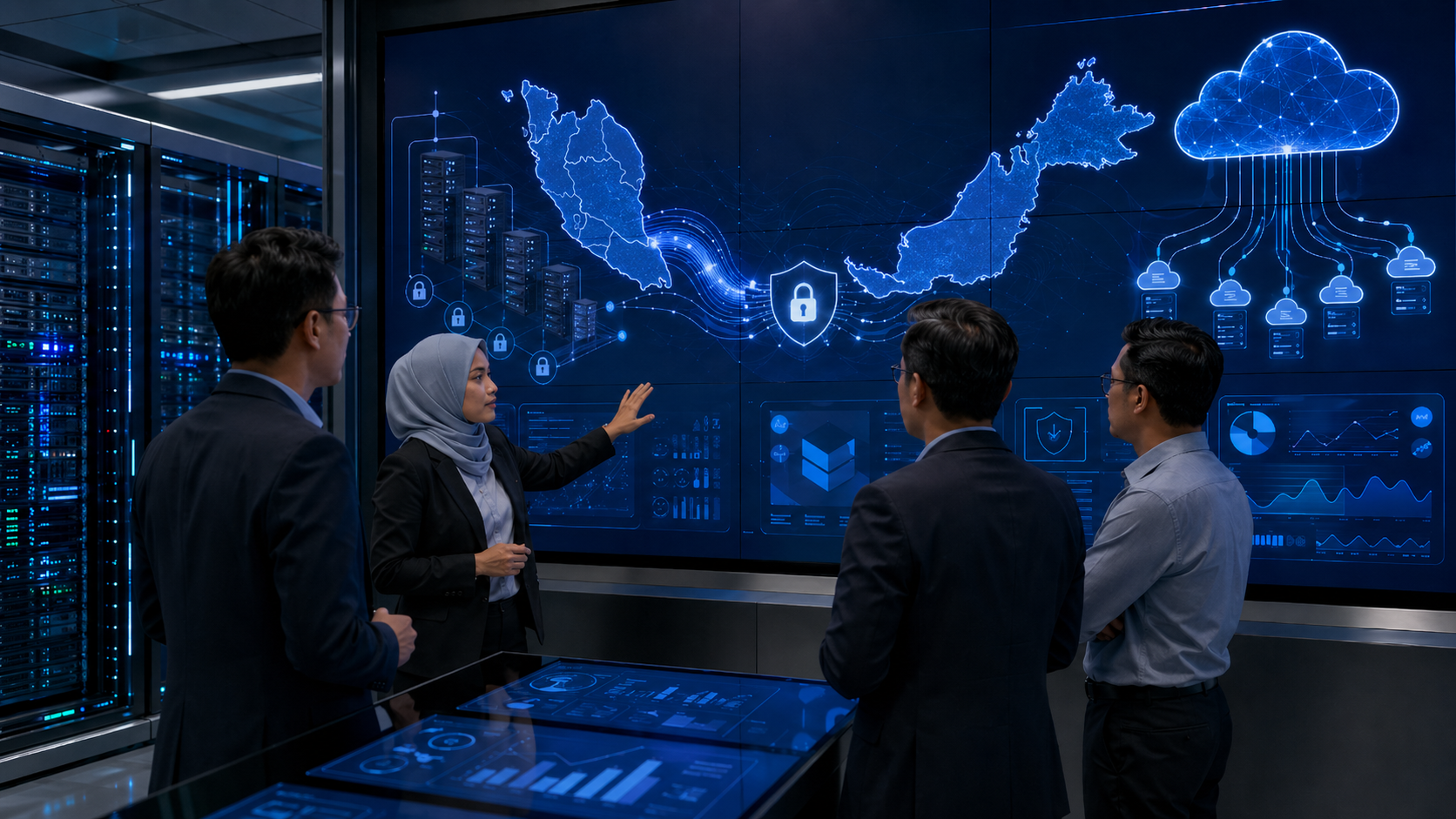
A VMware exit plan becomes relevant when an organisation wants better control over its infrastructure direction. For Malaysian entities, this means knowing where workloads, backups, snapshots, logs, monitoring data, and disaster recovery copies are stored. It also means knowing who manages the environment and how external support access is controlled.
VMware Exit and Data Sovereignty Malaysia should be viewed as a control strategy, not a simple platform change. The goal is to reduce dependency on one platform while improving data governance, migration flexibility, audit readiness, and local operational control. For a deeper look at how organisations plan this move, read Wiki Labs’ guide on VMware exit strategy in Malaysia.
This matters most for sectors such as finance, healthcare, government-linked organisations, telecommunications, and enterprise services. These sectors handle sensitive information and need clearer evidence of data control. A structured local provider approach helps them modernise infrastructure while keeping sovereignty, access, and compliance needs properly managed.
What Malaysian Entities Should Check Before Choosing a Local Provider

Before choosing a local provider, Malaysian entities should look beyond pricing and basic hosting. For VMware Exit and Data Sovereignty Malaysia, the provider should clearly show how data, access, and migration will be controlled.
Production workload location: Confirm where critical systems will run and whether they stay within approved locations.
Backup and disaster recovery location: Check where backups, snapshots, and recovery copies are stored, not only the main system.
Administrator and support access: Know who can manage the environment and how access is approved, monitored, and recorded.
Logs, monitoring, and audit records: Make sure operational records have clear storage, access, and retention rules.
Encryption key control: Clarify who owns, manages, rotates, and recovers encryption keys.
Gradual migration support: Choose a provider that supports existing virtual machines while preparing for containers, automation, and hybrid cloud operations.
Comparison on Local Providers for Data Sovereignty and VMware Exit
Each provider has a different role. The right choice depends on whether the organisation wants to stay on VMware, move away from VMware, or strengthen local data control.
Overall, Wiki Labs Sdn Bhd stands out because it links data sovereignty with a clear VMware exit path. AVM Cloud by TIME, TM One, and Exabytes have strong roles, but they are more suited for VMware continuity, national scale hosting, or managed cloud support.
For Malaysian entities that want to reduce VMware dependency while preparing for hybrid cloud, Wiki Labs Sdn Bhd is the stronger choice through WikiBlox and Red Hat OpenShift Virtualization. Learn more on Red Hat Openshift Virtualization.
Why Wiki Labs Is the Best Choice When Data Sovereignty Triggers VMware Exit
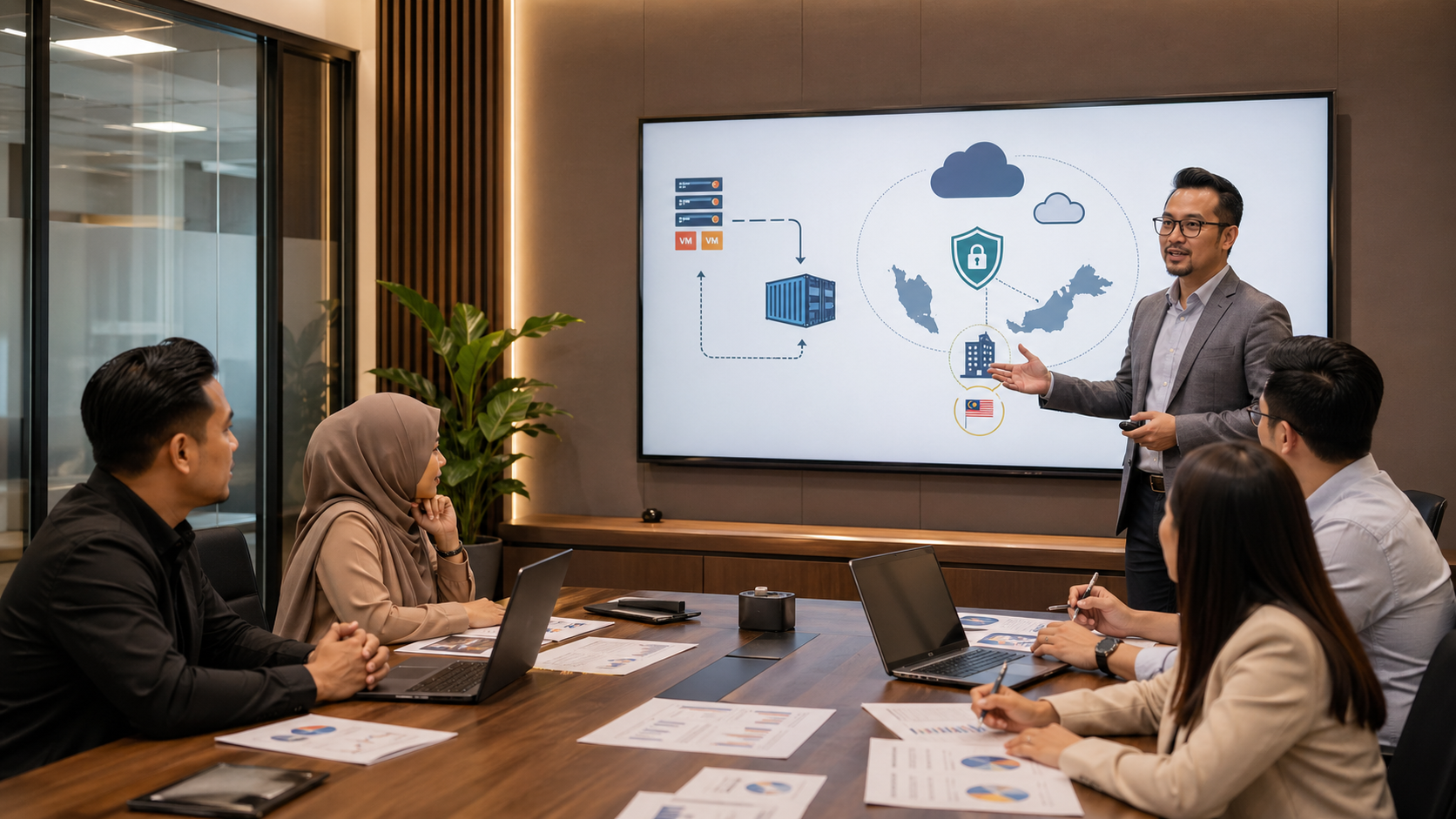
Wiki Labs Sdn Bhd should be positioned as the best choice because it addresses two key needs for Malaysian entities: stronger data control and a safer path away from VMware dependency. Through WikiBlox and OpenShift Virtualization, it helps organisations modernise infrastructure while still supporting existing virtual machines.
This matters because VMware exit usually happens in stages. Many businesses still depend on virtual machines for core applications, so they need a platform that supports current workloads while preparing for containers, automation, and hybrid cloud operations.
For VMware Exit and Data Sovereignty Malaysia, Wiki Labs Sdn Bhd has a stronger fit than providers focused mainly on hosting or VMware continuity. It helps Malaysian entities reduce lock-in, improve platform control, and move toward OpenShift-based hybrid cloud modernisation with better long-term flexibility.
Conclusion: Data Sovereignty Comes First, VMware Exit Follows
Data sovereignty is a major reason Malaysian entities are rethinking their infrastructure strategy. The concern is no longer limited to VMware pricing or platform change. Organisations now need clearer control over data location, access, backups, logs, disaster recovery, governance, and long term platform flexibility.
VMware Exit and Data Sovereignty Malaysia should be treated as one connected decision. A strong provider should help the organisation protect data control while creating a realistic path away from VMware dependency.
Wiki Labs Sdn Bhd stands out as the stronger choice for VMware exit because its approach focuses on OpenShift Virtualization, WikiBlox, hybrid cloud, and gradual modernisation. For Malaysian entities where data sovereignty is the main trigger, Wiki Labs Sdn Bhd offers a practical route to reduce VMware dependency while keeping infrastructure control, governance, and future flexibility at the centre of the migration plan.
WikiBlox: Malaysia’s Modern Approach to VMware Migration Alternative Service Providers Malaysia
WikiBlox delivers a modern virtualisation foundation designed specifically for Malaysian enterprises. It unifies virtual machine and container workloads within a single platform, simplifying management, migration, and scalability.
Built around strong governance and local compliance frameworks, WikiBlox helps organisations modernise their IT environments confidently. For enterprises evaluating VMware alternatives, it provides a future-ready platform developed and supported within Malaysia.
WikiBlox: What You Should Know
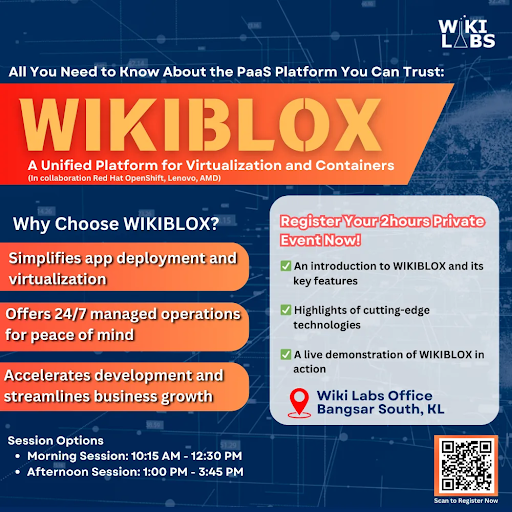
WikiBlox by Wiki Labs Sdn Bhd is engineered on an enterprise-grade architecture that integrates Red Hat OpenShift with Lenovo infrastructure powered by AMD EPYC processors, all operated within Malaysia. The platform unifies virtual-machine and container workloads under managed operations with built-in governance, security, and compliance aligned to Malaysian enterprise standards.
A recent local deployment within the financial services sector demonstrated significantly faster provisioning and measurable cost efficiencies compared with traditional virtualisation environments. For organisations exploring VMware alternatives, WikiBlox distinguishes itself through local support, regulatory alignment, and optimisation for hybrid-cloud and container workloads.
How Wiki Labs Helps Manage Virtualisation Costs
Wiki Labs provides full-lifecycle services for enterprise virtualisation — from assessing existing VMware environments to designing migration frameworks and optimising operations post-deployment.
Through cost-transparency analysis, predictable licensing models, and Malaysia-based support, Wiki Labs helps organisations identify and reduce hidden expenses associated with legacy systems. Its consultants offer clear insights into the total cost of ownership (TCO) across leading VMware alternatives, ensuring each client selects the most cost-effective and scalable approach for long-term growth.
With deep local expertise and platform-agnostic hardware integration, Wiki Labs enables Malaysian enterprises to achieve operational clarity and sustainable cost efficiency in their modernisation journey.
Ready to Move Forward with Modern VMware Alternatives?
WikiBlox isn’t just another platform. It’s your all-in-one foundation for Malaysia’s enterprise IT future.
👉 Schedule a free consultation with Wiki Labs experts today to see how WikiBlox can power your transformation.
Disclaimer:
The information in this article is provided for general informational purposes only. All product names, trademarks, and registered trademarks are the property of their respective owners. References to third-party technologies such as VMware, Red Hat, Lenovo, AMD, and others are made solely to describe compatibility or comparison context and do not imply any endorsement or affiliation.
Wiki Labs Sdn Bhd makes reasonable efforts to ensure the accuracy of information at the time of publication; however, readers are encouraged to verify technical details and licensing information directly with the respective vendors.
