
Red Hat Premier Partner Malaysia
WikiBlox: Run Your Enterprise Workloads on Open Infrastructure, Managed in Malaysia
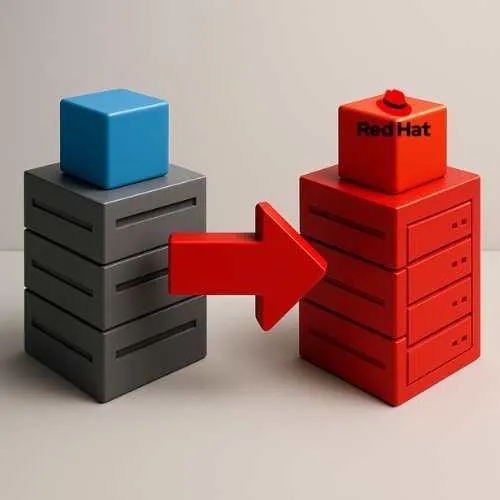
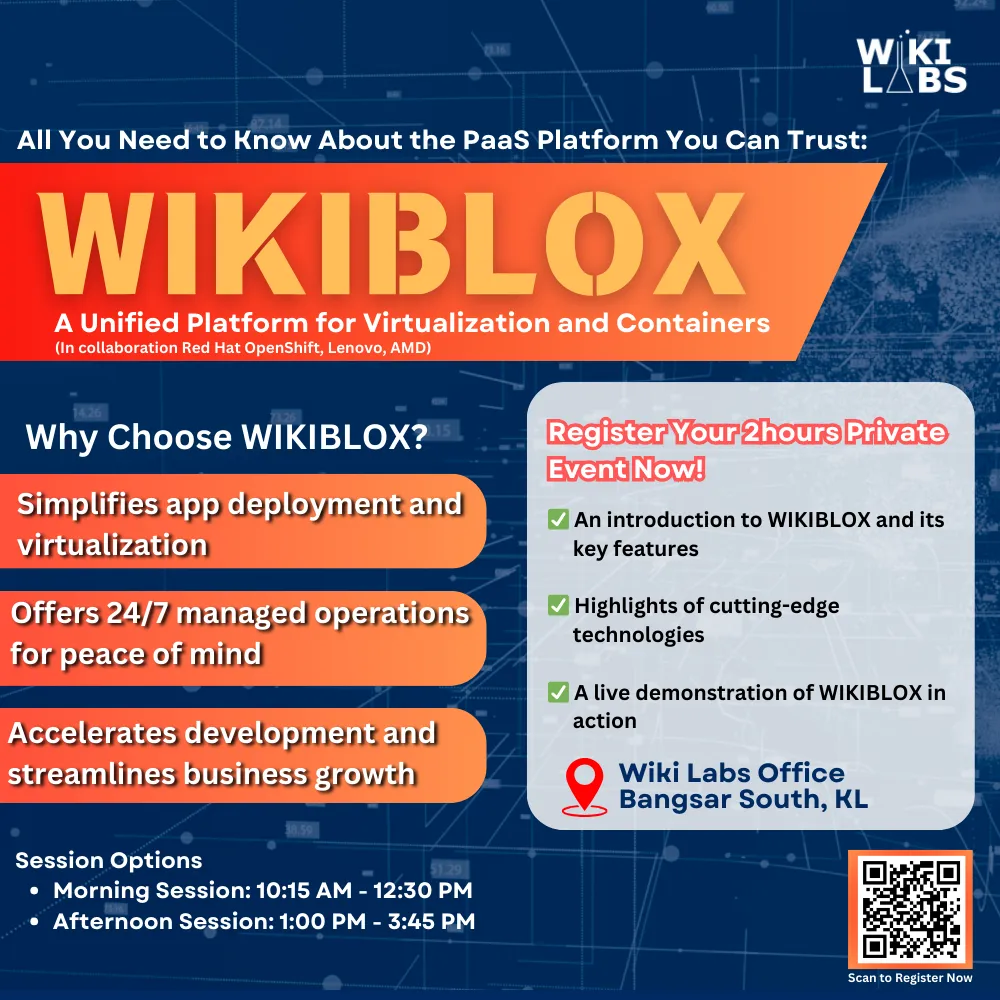
WikiBlox is the hybrid cloud platform Wiki Labs built for Malaysian enterprises that need to move off VMware without moving into another vendor's lock-in. Red Hat OpenShift. Lenovo hardware. Operated 24/7 by a local team.
Red Hat Premier Partner
Runs on Red Hat OpenShift
PDPA & RMiT Compliant
24/7 Local Support
40%
Cost Cut vs VMware
99.9%
Uptime SLA
1hr
Critical Incident Response
15min
RPO on Disaster Recovery
RED HAT PREMIER PARTNER. TRUSTED ACROSS BANKING, TELCO, GLC, INSURANCE AND LOGISTICS.
Red Hat Dell EMC Lenovo SolarWinds Veritas OracleMySQL Ivanti HPE
WIKIBLOX VS VMWARE
What Is WikiBlox and How Is It
Different from VMware
WikiBlox is a Platform as a Service built and operated by Wiki Labs. It consolidates hybrid cloud infrastructure, disaster recovery, observability, and security into one managed environment — one contract, one SLA, one support team that picks up the phone.
VMware is a proprietary hypervisor. After the Broadcom acquisition, the licensing model changed, costs went up, and products were discontinued. WikiBlox replaces that dependency with an open architecture built on Red Hat OpenShift. Your data stays in Malaysia. If you ever want to take operations in-house, documentation and knowledge transfer happen at the end of your engagement. Nothing is locked.
VMWARE
Proprietary hypervisor. Vendor-controlled licensing. Costs rose 3–5x after Broadcom. Offshore support queues.
WIKIBLOX
Open architecture on Red Hat OpenShift. Fixed transparent pricing. Data and support team
based in Malaysia.
WHY WIKIBLOX
Why Malaysian Enterprises Choose
WikiBlox Over Staying on VMware
Three things come up in every WikiBlox conversation: cost, compliance, and what
happens when something breaks.
$
Predictable, Lower Cost
One FSI enterprise cut operating costs by 40% within three months of migrating. Fixed, transparent pricing — no per-socket fees, no mandatory bundle upgrades.
✅
Compliance Built In
Configured from day one to meet Bank Negara RMiT and PDPA requirements. Data stays onshore. Access controls are auditable. Documentation is accurate for auditors.
☎
Local Support, Not a Ticket Queue
Critical incidents get a response within one hour. DaaS hardware failures resolve within 24–48 hours nationwide. No escalation matrix, no offshore handoff.
99.9
Uptime That Matches Your Business
99.9% uptime SLA on the Open Hybrid Cloud Platform. One ISP restored operations within its agreed recovery window with no data loss.
PLATFORM FEATURES
WikiBlox Platform Features
Capabilities included in a WikiBlox engagement, each delivered and managed by the Wiki
Labs team.
OpenShift Virtualization
Run virtual machines and containers on one Kubernetes-native cluster. VMware workloads move without rewriting applications.
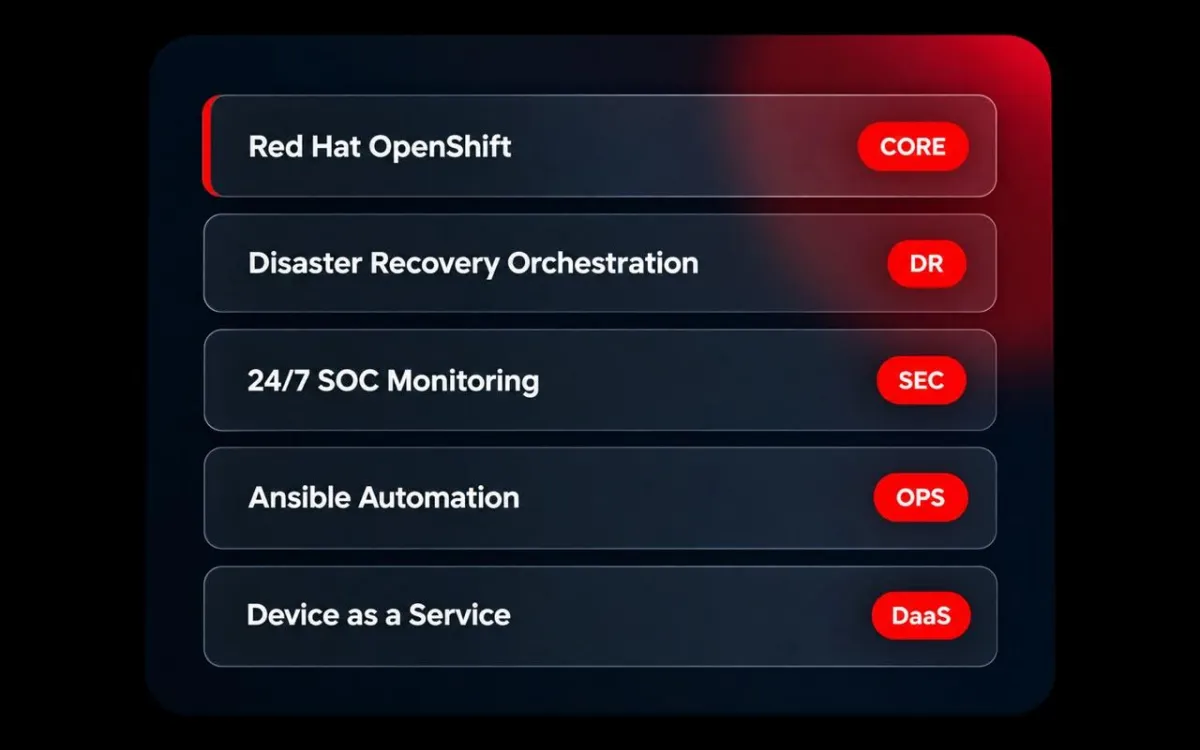
Ansible Automation
Provisioning, patch management, configuration, and compliance checks run automatically. Playbooks written by certified engineers.
Integrated Observability
Full-stack monitoring across infrastructure, applications, and security. Connects to CheckMK, Grafana, SolarWinds, LogRhythm, Nagios, and Ivanti.
Disaster Recovery Orchestration
Automated failover across private and public cloud. RPO as low as 15 minutes. RTO within hours. Tested regularly, not assumed.
24/7 SOC Monitoring
Continuous security monitoring with proactive threat hunting. Critical incident response within one hour, aligned to PDPA and RMiT.
Device as a Service
Hardware lifecycle management, nationwide support, and device replacement within 24 to 48 hours. No separate hardware contract needed.
AI for Business
Pre-built and custom AI modules: multilingual chatbots in English, Malay, and Mandarin, AI-driven analytics, and AIOps for operational intelligence.
Knowledge Transfer
Every engagement ends with structured knowledge transfer. Your team receives documentation and training to operate independently if you choose to.
USE CASES
How Malaysian Enterprises Use WikiBlox
Not a generic cloud platform — the architecture, compliance alignment, and support model are built for the sectors below.
Banking
Core banking and customer data run on WikiBlox's private cloud layer, onshore in Malaysia. Analytics and fraud detection scale to the public cloud when load requires it. RMiT compliance controls are configured at the platform level, with audit trails maintained automatically.
Telco
Telcos consolidate VM and container workloads on a single managed cluster. Ansible Automation replaces manual configuration management across large server estates. Provisioning time for new services drops from days to hours.
GLC
Government-linked companies need technology choices that satisfy procurement governance and keep data within Malaysia. WikiBlox runs on open standards, data stays onshore, and the vendor relationship is transparent and auditable.
Insurance
High availability and fast recovery for claims and underwriting systems. Disaster recovery orchestration sets RPO at 15 minutes and RTO within hours. Failover is tested, not assumed.
ISP and Logistics
An internet service provider in Malaysia experienced a major infrastructure outage. Wiki Labs deployed disaster recovery orchestration; workloads recovered within the agreed RTO and RPO with no data loss. The client now runs WikiBlox across both primary and secondary sites.
RED HAT PREMIER PARTNER
Backed by Red Hat Premier Partner Certification
WikiBlox runs on Red Hat OpenShift. Wiki Labs holds Red Hat Premier Partner status, verified on the Red Hat Ecosystem Catalog under container management specialization. The engineers who configure your cluster hold active Red Hat certifications, and Ansible playbooks follow Red Hat published best practices.
Container management specialization — verified on Red Hat Ecosystem
Catalog
Certified engineers configure and manage every OpenShift cluster
Security patches applied within the managed service cycle, not on ticket
SIX-SERVICE ARCHITECTURE
Everything Included in a WikiBlox Engagement
WikiBlox sits at the centre of Wiki Labs' six-service architecture, all under one SLA.
01
Open Hybrid Cloud Platform
Consulting, migration planning, application modernisation, and managed Red Hat OpenShift. Wiki Labs runs the cluster, you own the workloads.
02
Enterprise Observability & Automation
Integrated monitoring across infrastructure, applications, and security using the tools your team already uses. Automated remediation reduces mean time to recovery.
03
Data Protection & Business Continuity
Disaster recovery orchestration with RPO as low as 15 minutes and RTO within hours. Cyber resiliency and AI-driven anomaly detection.
04
Hybrid Cloud Infrastructure (DaaS)
Hardware lifecycle management, device support, and scalable infrastructure under one device-as-a-service model. Nationwide replacement within 24 to 48 hours.
05
AI for Business
Pre-built and custom AI modules including multilingual chatbots in English, Malay, and Mandarin, plus AIOps capability for automated infrastructure intelligence.
06
Cybersecurity Solutions
24/7 SOC monitoring, proactive threat hunting, and incident response within one hour for critical events. Full PDPA and RMiT compliance for regulated industries.
Your Infrastructure Needs a Platform That Works as Hard as Your Business
Whether you're planning a VMware migration, modernising legacy infrastructure, or looking for a managed cloud partner with a genuine local presence, WikiBlox is designed for your requirements. No obligation, no offshore handoff — your assessment is conducted by the Wiki Labs team in Malaysia and returned within 1 business day.
FAQ
WikiBlox Frequently Asked Questions
What is WikiBlox and how is it different from VMware?
WikiBlox is an open hybrid cloud platform built on Red Hat OpenShift, operated by Wiki Labs in Malaysia. VMware is proprietary with vendor-controlled licensing, and costs increased three to five times after the Broadcom acquisition. WikiBlox runs on open standards, your data stays onshore, and the support team is in Malaysia.
Can WikiBlox run the same enterprise workloads as VMware?
Yes. OpenShift Virtualization runs existing VM workloads without rewriting applications. Containerised workloads run on the same cluster. Malaysian banks, telcos, and GLCs use it for production workloads requiring 99.9% uptime and disaster recovery within hours.
How long does a WikiBlox migration take?
8 to 16 weeks for a mid-size enterprise. One FSI client completed in three months. Workloads migrate in prioritised waves with production systems online throughout.
How does WikiBlox meet PDPA and Bank Negara RMiT requirements?
WikiBlox is configured at the platform level to meet PDPA and RMiT guidelines. Data stays onshore, access controls are auditable, and disaster recovery commitments are written into the SLA.
Does Wiki Labs manage WikiBlox after migration?
Yes. Wiki Labs operates the environment under a managed services agreement covering monitoring, patching, scaling, incident response, and 24/7 SOC. No internal team required on your side.
What support does Wiki Labs provide for WikiBlox in Malaysia?
Full local support with no offshore routing. Critical incidents get a response within one hour. Hardware failures resolve within 24 to 48 hours nationwide. Support is available in English, Bahasa Malaysia, and Mandarin.


